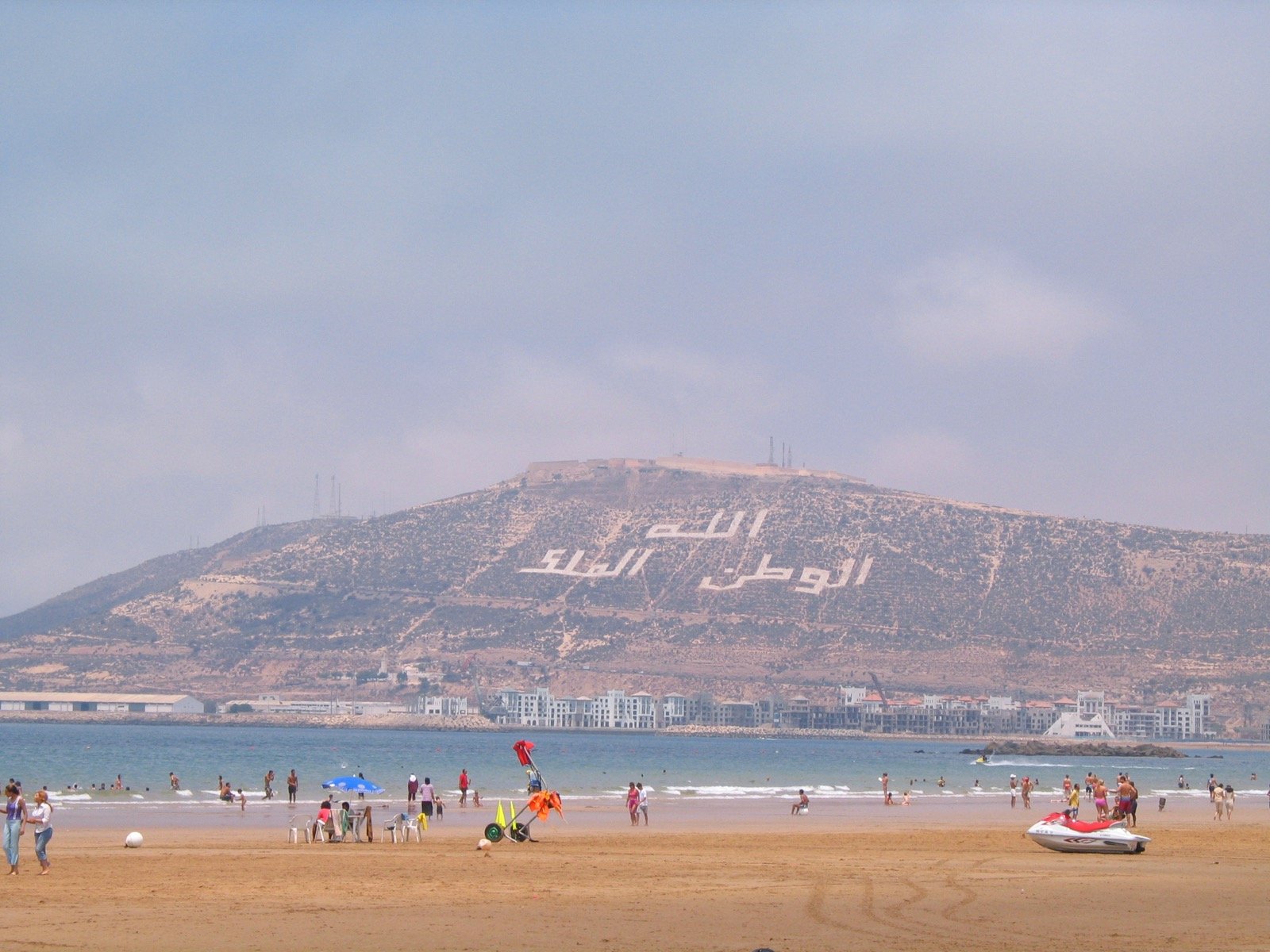
Yes. Agadir is one of the calmest places in Morocco to land as a first-timer, and the ordinary version of a week here involves nothing more dramatic than a sunburn and one taxi driver who tries his luck. This is not a medina maze. Agadir was rebuilt on a grid after the 1960 earthquake, so you get wide lit boulevards, a ten-kilometre beach with a patrolled promenade running its length, and street names that actually help you. Petty crime exists the way it does in any beach city on earth: pickpockets in the market crowd, a phone lifted off a café table, an argument about a fare. Serious crime against visitors is rare, and almost nothing you will read below is about violence.
What follows is the honest version rather than the tourist-board one. Which neighbourhoods are comfortable at midnight and which ones you should leave by taxi. The exact scams that run here, and the sentence that ends each of them. How the taxis really work, what the nights are like, and what actually happens to a woman walking the promenade alone. Save two numbers before you go any further, 19 for police and 15 for an ambulance, and you have already done the single most useful thing on this page.
The short answer
Agadir is safe for tourists with normal city sense: a purpose-built resort city with lit boulevards, a policed beachfront and very little serious crime, where the genuine risks are pickpockets in crowds, taxi fares and pushy street selling rather than anything that will hurt you.
The useful comparison is not “Morocco” in the abstract. It is other beach cities you already know. Agadir feels closer to Málaga or Alicante than to the labyrinth people picture when they think of this country, and that is by design. Roughly a third of Morocco’s hotel nights happen here, the whole seafront exists to serve visitors, and there is a permanent uniformed presence along the tourist strip because the city’s entire economy depends on you having an uneventful holiday. If you have read our national guide on whether Morocco is safe for tourists, Agadir sits at the easy end of everything described there.
What does go wrong is boring and preventable. A bag left on the sand while someone swims. A phone face-up on an outdoor table at the marina. A wallet in a back pocket inside Souk El Had at four in the afternoon, when the aisles are shoulder to shoulder. A price never agreed before the engine started. Every one of those is a decision, which is the good news, because it means the outcome is mostly yours to control.
The other honest half: Agadir is a working Moroccan city of several hundred thousand people, not a resort compound. Fifteen minutes inland from your hotel is ordinary life, which is far more interesting than the strip and entirely welcoming, but it is also unlit at midnight, has no taxis passing and no one who speaks your language. Knowing that boundary is the whole skill. Everything below is just detail on where it sits.
Staying connected in Agadir
A working phone is not a nice extra here, it is the practical safety tool. It is your map, so nobody can “guide” you somewhere you did not ask to go. It is how you show a driver the destination instead of negotiating it. It is how you dial 19. And it is how the people at home know where you are without you having to think about it.
Coverage across the bay is strong, on all three Moroccan networks, and the promenade and hotel districts are well served. It thins in the places you will actually want to explore: the coast road north towards Taghazout and Tamraght, the climb inland to Paradise Valley and Immouzzer, and the argan country east of the city. Assume a dead patch on any mountain day and plan for it. Our guide to what still works on your phone with no signal covers the offline setup worth doing before you fly.
The simplest fix is an eSIM, because it removes the queue, the passport photocopy and the shop hours from the equation entirely. Our Morocco eSIM is one plan built around your dates: you pick your trip length, it arrives as a QR code by email before you leave, and it carries unlimited data, two hours of calls and 24/7 support. Install it at home, land in Agadir, and you are online walking off the aircraft rather than hunting a kiosk at Al Massira with your luggage.
Where to stay, and where to be careful
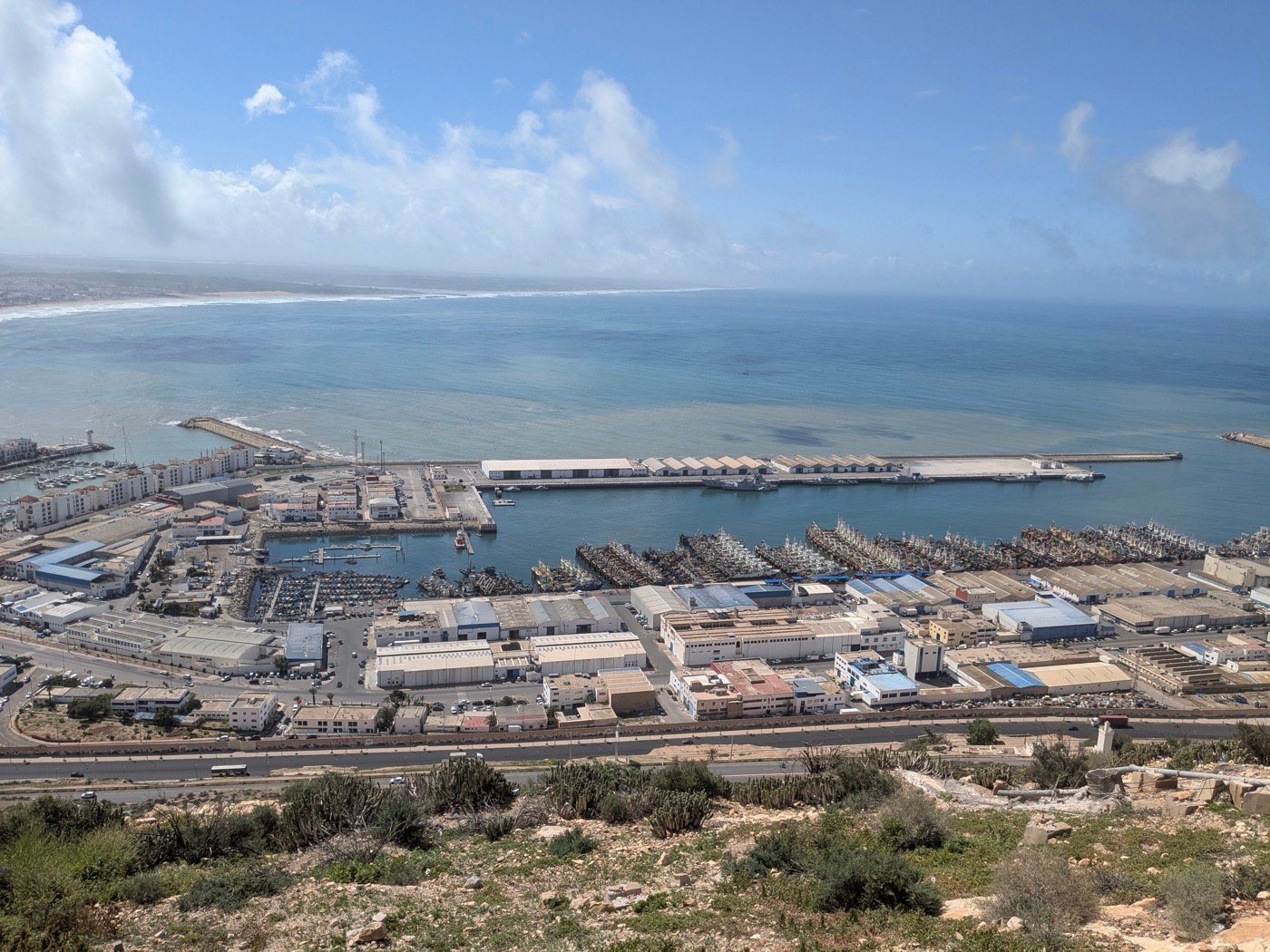
This is the section most Agadir safety pages refuse to write, and it is the one that actually decides how your trip feels. Agadir’s geography is simple once someone draws it for you: a curved bay with the marina and port at the northern end, the hotel strip and promenade along the middle, the quieter resort belt of Founty at the southern end, and the real city stacked inland behind them.
Below are three honest tiers. Read the third one carefully, because it is not a list of dangerous places. It is a list of places with nothing open, no passing taxis and no reason for a visitor to be standing there at one in the morning.
Comfortable day and night. Book here for a first trip and you will barely think about safety at all.
The hotel belt behind the beach, around Boulevard du 20 Août, and the paved promenade that runs the length of the bay. Lit, busy until late, patrolled, and full of joggers and families well past ten. This is where most visitors stay and it is the right answer for a first visit.
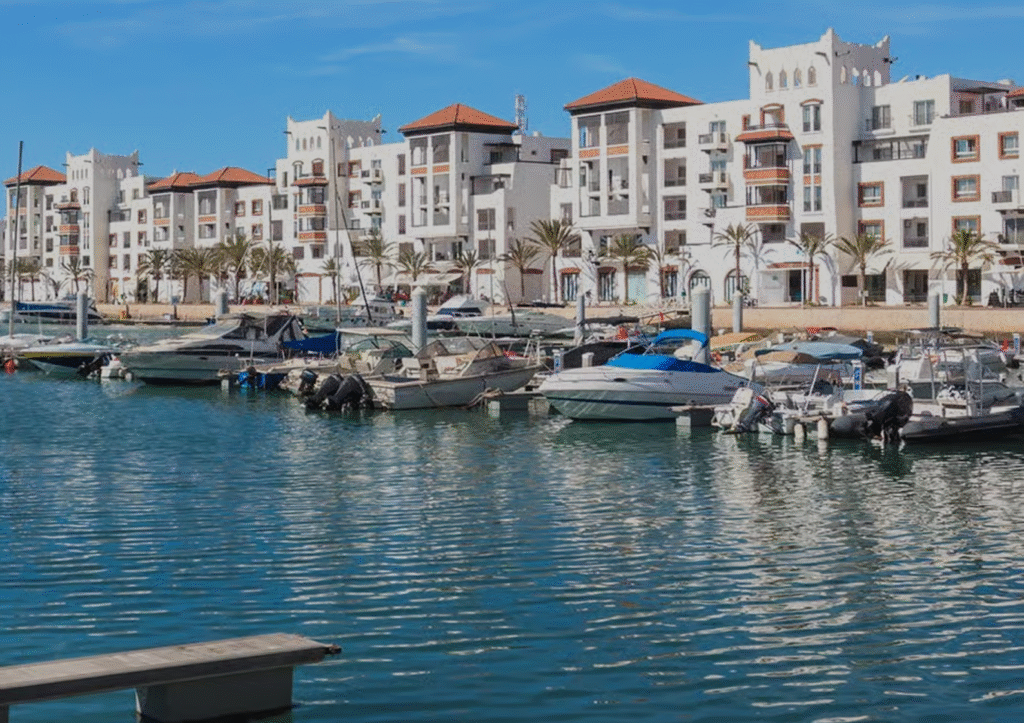
The modern quarter at the northern end by the port: low white apartment blocks over café terraces, boats, wide walkways. It is calm, well lit and self-contained, and it stays pleasant at midnight. The easiest possible landing if you want zero friction.
The upmarket resort belt at the southern end, big hotels set back in gardens with quiet streets between them. Sleepy rather than lively, which is exactly what some people want. Everything is a short walk along the sand or a two-minute taxi from the restaurants.
Fine by day, take a taxi after dark. Go to all of these. Just do not walk back from them at midnight.
The rebuilt old-town quarter inland, around Place Lahcen Tamri and the streets off Avenue du Président Kennedy. The best cheap food in Agadir and full of Moroccan families in the evening. The side streets behind it empty out quickly, so eat there happily and take a petit taxi back rather than walking the twenty minutes to the beach.
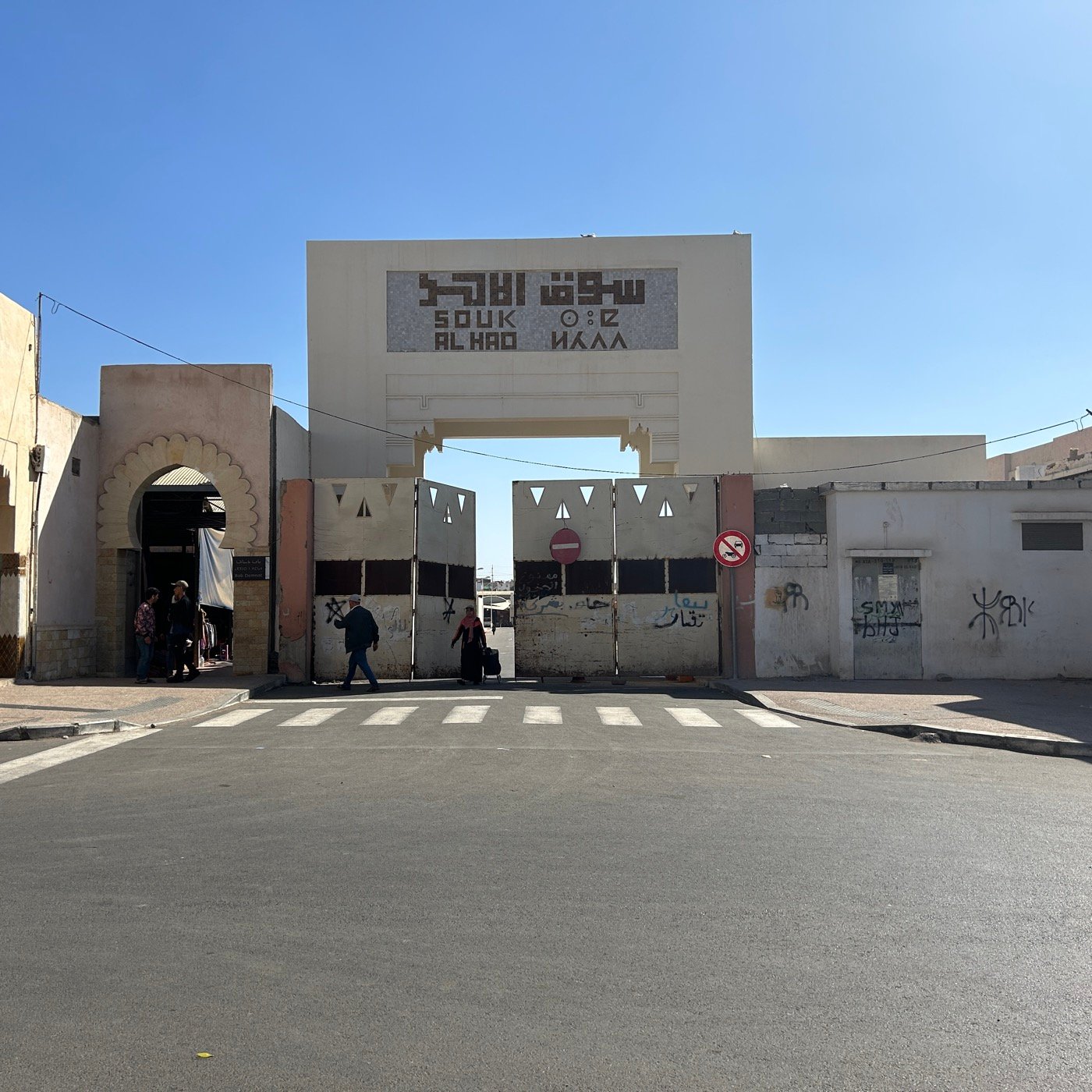
The walled market with thousands of stalls, closed on Mondays and shutting in the early evening. Superb by day and also the most reliable pickpocket ground in the city, purely because of the crush. Front pockets, zipped bag, phone away. Once the gates close the surrounding blocks go quiet fast.
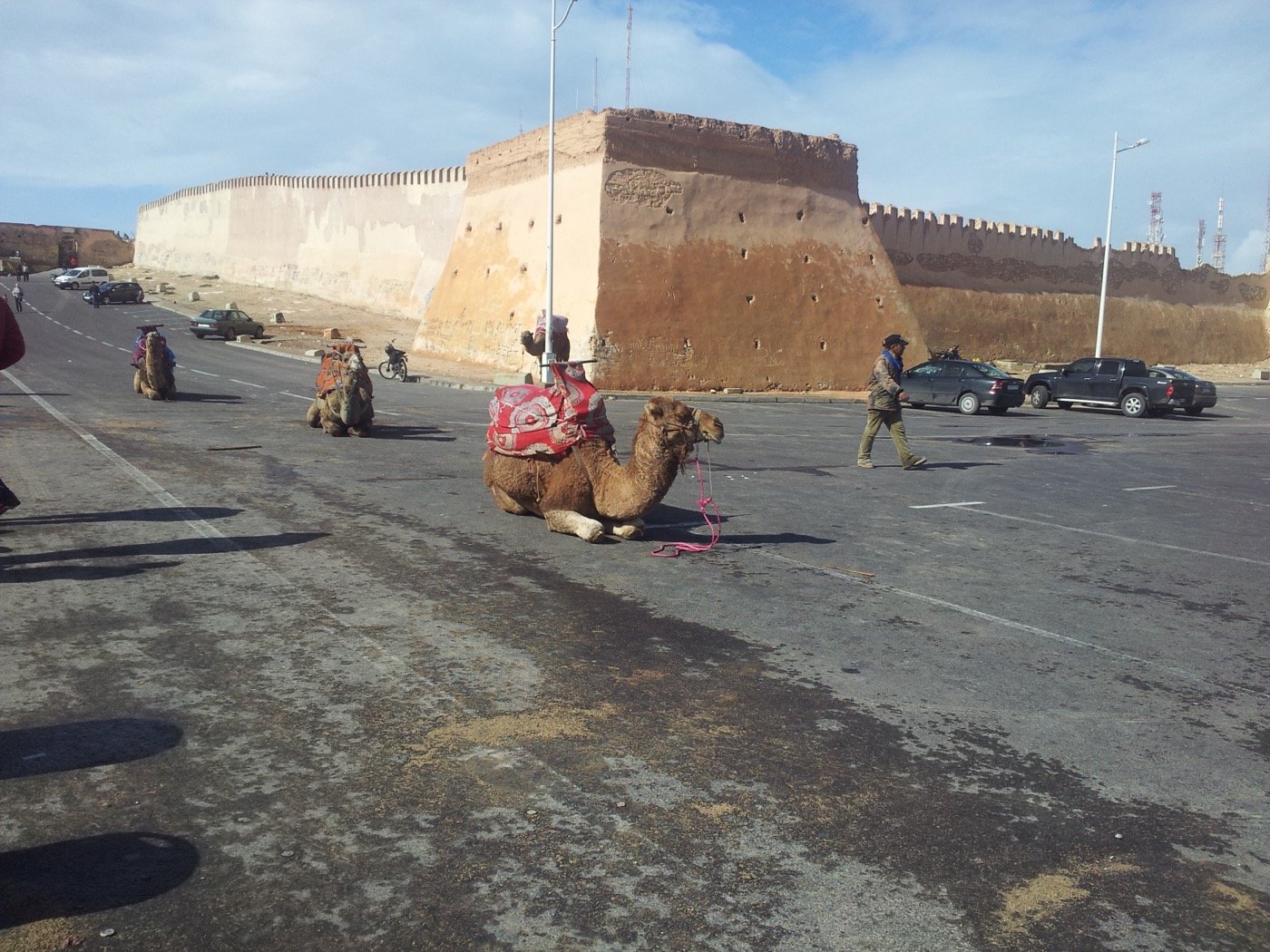
The hilltop ruins above the port, reached by the cable car, with the best view of the bay at sunset. Go up, watch it, come down by cable car or taxi. The hill road is unlit and empty after dark and there is nothing to be gained by walking it.
The coastal suburb north of the port: surf breaks, local cafés, no tourist infrastructure and no English menus. A good daytime surf and a real slice of the city. Not an evening plan unless a local is taking you.
Better skipped unless you know the city. Nothing here is about the people who live in these places, who are getting on with their lives. It is about being somewhere with no lights, no crowd and no way home.
The transport towns south-east of Agadir, where the grand taxis and intercity coaches run from. Crowded, entirely local, and one of the few genuine pickpocket hotspots in the region. Go in daylight if you need a shared taxi to Taroudant or Tiznit, then leave. It is not an evening destination.
The sand is a public beach by day and a dark, deserted strip once the restaurants close. The promenade above it stays lit and populated. Stay on the promenade, especially after a drink, and especially alone.
North of the marina: working docks, lorries, fencing and no pavements. There is no reason for a visitor to be in there at any hour, and no one around to ask for help if something goes wrong.
The newer developments out towards Tikiouine, Bensergao and Tildi are ordinary residential areas full of families by day. At night they are unlit, empty and far from a taxi rank. This is a warning about geography, not about people.
The scams to know
Agadir’s street hustle is milder than Marrakech’s, but it is the same repertoire adapted to a beach city. None of it is aggressive and none of it is a threat to you. It is commerce, run on the assumption that a polite foreigner will not want to be rude. The counter-move in every case is the same: be warm, be brief, do not stop walking. Our wider guide to common tourist scams in Morocco covers the national versions; these are the ones you will actually meet here.
He appears near Souk El Had, the marina or the kasbah car park, walks with you, narrates a few landmarks, then names a fee. What to say: “La, shukran” — no thank you — without breaking stride or making eye contact. Politeness plus momentum ends it every time.
The souk, the kasbah or the museum is shut, but by happy coincidence there is a Berber market or a family cooperative open just for today. It is not shut and there is no coincidence; he earns a commission on whatever you buy. What to say: “I’ll go and check for myself, thanks,” then look up the hours on your phone. Souk El Had closing on Mondays is the one true version of this line.
The Souss is genuine argan country and real women’s cooperatives are one of the best things you can support here. The version that finds you on the street or bolts itself onto a day trip is usually diluted oil, sold well above a marked-price shop in town. What to say: “I’ll buy where the price is on the bottle.”
“The meter doesn’t work,” or a flat tourist price named before you sit down. Agadir’s orange petits taxis are metered and required to use it. The higher night tariff after 8pm is official and not a trick. What to say: “Compteur, s’il vous plaît.” If he refuses, shut the door and take the next one. There is always a next one.
On the promenade and around the souk, a woman takes your hand and starts drawing before anything has been agreed, then names a price for finishing the second one. Black henna can also irritate or burn skin. What to say: Hands in pockets, “La, shukran,” keep moving. If you do want it, agree the price out loud before the first line is drawn.
A stranger materialises at your shoulder to “show you” the machine, or to tell you your card is stuck. What to say: “No, thank you,” then walk away from the machine entirely and use another. Draw cash inside a bank lobby in the daytime. Our guide to money, cards and ATMs in Morocco has the rest.
Paradise Valley, Taghazout, a Marrakech day trip, sold off a laminated sheet by a man on the promenade. No company name, no insurance, occasionally no return leg. What to say: “I’ll book it at my hotel.” Then do.
One more thing worth knowing, because it causes more confusion than any actual scam: some traders count in rials rather than dirhams, at twenty rials to the dirham. A number that sounds alarming is often nothing of the sort. Ask for the price in dirhams and the misunderstanding evaporates.
Getting around safely
Agadir’s taxis come in two species and the difference matters. Petits taxis are orange, carry up to three passengers, stay inside the city, and run on a meter. Ask for the meter as you get in, watch it start, and you will never have a problem. Drivers may pick up another passenger heading the same way, which is normal and legal here rather than a cause for concern.
Grands taxis are the older white saloons. They run fixed routes for a fixed price per seat, six passengers at a time, and they are how you reach Taghazout, Taroudant, Tiznit or the airport. You can buy two seats, or the whole car, if you would rather not be wedged in. If a shared car makes you uneasy, paying for the extra seat is a small price for a comfortable hour.
A few things about moving around this city that other guides get wrong:
- There is no train and no tram in Agadir. The nearest railhead is Marrakech, roughly three hours away, and ONCF’s Supratours coaches connect the two so you can buy one through ticket. CTM runs the other main long-distance coach network. If you are planning a wider route, our guide to trains in Morocco explains where the network actually reaches.
- The airport is a real distance away. Agadir Al Massira sits about 25 to 30 kilometres inland. There is a posted fixed tariff at the official taxi rank, so read it before you agree anything, and ignore anyone approaching you inside the terminal. A pre-booked hotel transfer is the calmest arrival there is.
- Do not plan around a ride-hailing app. Uber left Morocco years ago and the apps that remain operate in a grey zone with patchy Agadir coverage. Treat the taxi rank as the default and you will never be stranded refreshing a screen.
- City buses exist and are fine. Cheap, slow, and a perfectly reasonable daytime way to reach Souk El Had or Inezgane. Keep your bag in front of you when it is full.
- Walking is genuinely pleasant here. The promenade is flat, lit and continuous, which is not true of most Moroccan cities. Just respect the scale: the bay is longer than it looks and “along the beach” can mean an hour.
- If you hire a car, expect radar checks on the N1 and gendarmerie checkpoints on the rural roads, both of which are routine and polite. Slow down, greet them, carry your documents. The men in hi-vis vests who help you park are a normal institution, not a shakedown; a small coin settles it.
Agadir at night
Agadir after dark is one of the friendlier evenings in Morocco, because the whole city is built around being outside. In summer the promenade is thick with families until well past eleven, the marina cafés run late, and the restaurant terraces along the seafront and in Founty stay busy. Boulevard du 20 Août is where the bars and hotel clubs are. None of this requires courage; it requires a table booking.
What changes is the boundary rather than the mood. The sand below the promenade goes dark and empty. Souk El Had shuts. The streets inland of the main avenues thin out sharply, and Talborjt’s back lanes go quiet after the restaurants close. The lit strip stays lit, and staying on it is the whole rule.
On drinking: alcohol is served in hotels, licensed restaurants and bars, and sold in the sealed section of the larger supermarkets. Drinking in the street is not done, and being visibly drunk in public will attract police attention long before it attracts trouble. During Ramadan, availability and opening hours change considerably, so check before you build an evening around it.
A neutral note about the late strip, because you would rather read it here than work it out at midnight: a handful of the later bars along the main boulevard have a nightlife scene that is not what a family is looking for. Nothing happens to you and nobody is dangerous, but if you want a quiet drink, the hotel bars, the marina and the seafront restaurants are the easy version.
Getting home is the part worth planning. Take a taxi from the door of wherever you are eating rather than walking inland to find one. Expect the legal night tariff on the meter. And if you are out alone, tell someone where you are: the free Stay Safe Morocco app has a Check-on-Me timer for exactly this, so if you do not check in by the time you set, the people in your Safety Circle are told where you were. Our guide to building a family check-in plan covers how to set that up without anyone feeling monitored.
Solo travellers, and solo women
Agadir is the softest landing in Morocco for a solo traveller, and that includes solo women. There is no medina to get lost in, foreigners are ordinary rather than an event, the promenade is public and open in a way that narrow streets are not, and the city is used to people arriving alone. Plenty of women spend a fortnight here and describe the trip as uneventful, which is exactly the word you want.
Here is the honest part, because pretending otherwise helps nobody. You will get attention. Comments, “gazelle”, “where are you from”, a shopkeeper who follows the question with three more, occasionally someone walking alongside you for a block. It is verbal and it is persistent, and it is far more wearing than it is frightening. Touching is rare and violence is rarer still.
What actually works, from women who live and travel here:
- Do not break stride. A flat “la, shukran” delivered without stopping and without a smile ends nine approaches in ten. A smile and an apology read as an opening, and the conversation continues.
- Do not explain. You owe nobody your itinerary, your hotel or your marital status. “I’m meeting friends” is a complete sentence and a very effective one.
- Choose your terrace. Cafés with Moroccan women and families in them are a different atmosphere from the all-male pavement cafés, which are not hostile but will make you the subject of the room.
- In a shared grand taxi, pay for two seats if you would rather not be pressed between strangers for an hour, or ask to sit next to another woman. Drivers arrange this without blinking.
- Dress is about comfort, not law. The beach and the hotel strip are relaxed and swimwear is entirely normal there. In Souk El Had, Talborjt and Inezgane, covered shoulders and knees will noticeably reduce the attention you get.
- Watch your bag, not your back. The realistic risk on this coast is a snatched phone or an unattended bag on the sand, not an assault. Use a hotel beach or a paid lounger where somebody is watching.
- Set a timer before you head out of town. Paradise Valley and the Immouzzer road are beautiful and have patchy signal. A Check-on-Me timer costs you nothing and means somebody notices if you do not come back on schedule.
For the fuller picture across the country, including the cities where this needs more attention than it does here, read our guide to Morocco for solo female travellers.
Things not to do
- Do not walk the dark sand at night, particularly alone or after drinks. Use the lit promenade above it.
- Do not follow anyone to a shop, a cooperative or a “special market” you did not go looking for.
- Do not get into a taxi without the meter running or the fare said out loud first.
- Do not carry your phone or wallet in a back pocket inside Souk El Had or the Inezgane crowds.
- Do not buy drugs, however casually they are offered around the surf beaches. Moroccan law takes it seriously and the offer is sometimes the setup.
- Do not photograph people, police or checkpoints without asking. Ask first and you will usually get a yes.
- Do not argue loudly in public. Volume loses here, a crowd gathers, and a calm exit always beats winning.
- Do not get on a quad bike or jet ski without a helmet, a licensed operator and a name on the paperwork.
- Do not leave anything visible in a hire car, anywhere, ever.
- Do not go looking for “the real Morocco” in Inezgane’s back streets at one in the morning. Go at ten in the morning instead, when it is genuinely wonderful.
Emergency numbers, and what to do
Three numbers cover Morocco. Put them in your contacts now, before you fly, because the moment you need them is the worst possible moment to be searching for them.
The distinction matters more here than in most Moroccan cities, because so much of what you will do sits outside the city limits. Inside Agadir, on the promenade or in Talborjt, it is 19. On the coast road to Taghazout, up in Paradise Valley, on the Immouzzer switchbacks or anywhere in the argan country, it is 177 for the Gendarmerie Royale, who police the rural roads. Our full guide to emergency numbers in Morocco has the rest, including what to expect when you call.
For medical care, the main public hospital in the city is Hôpital Hassan II, in the Talborjt district, and the region’s large teaching hospital is the CHU Souss-Massa. There are also private clinics close to the hotel strip that handle tourist cases routinely, and your hotel’s front desk will know which one is nearest and which your insurance will deal with. Ask them on the day you arrive rather than on the night you need it. If your trip continues north, we have a similar breakdown of the best hospitals in Marrakech for tourists.
Three practical things to do before you land. Save 19 and 15 as contacts. Screenshot your hotel’s name and address in French or Arabic, so a taxi driver or a passer-by can read it even with no signal. And write down where you are going each day and who knows about it.
That last one is what our free iOS app automates. Press SOS and it dials the correct Moroccan emergency number for where you are standing, logs your GPS, and sends your location to the Safety Circle you chose. Nobody is watching a screen and nobody is dispatched from our end. The call goes to the same services a local would ring, and the people who care about you know exactly where you were when you pressed it. That is the whole of it, and on a bad night it is plenty. The app also carries a directory of 172 hospitals across 31 cities and works with the essentials available offline, which is the part that matters on a mountain road with one bar of signal.
The bottom line
Is Agadir safe? Yes, with the same city sense you would use in Lisbon or Naples, and probably a little less vigilance than either. The city is flat, lit, walkable and set up for visitors, the crime that touches tourists is almost entirely of the pocket-and-price variety, and the people running the hustle are salesmen rather than threats. Stay on the seafront, the marina or Founty, keep your bag zipped in the souk, insist on the meter, and stay up on the lit promenade after dark. That is the entire syllabus.
Then go and use the place. Watch the sunset from Agadir Oufella, eat grilled sardines in Talborjt for the price of a coffee at home, take a grand taxi up to Taghazout for the surf, and walk the bay at nine at night with everyone else’s families. Our Agadir guide has the things to see once the safety question is settled. Before you fly, do the two-minute version of all this: save 19 and 15, sort your connectivity so your phone works the moment you land, and tell one person at home where you are staying. Confidence here is mostly just preparation that has already happened.
Frequently asked questions
Is Agadir safe for tourists in 2026? Yes. Agadir is one of Morocco’s most straightforward cities for first-time visitors, with a modern grid layout, a patrolled seafront and very little serious crime affecting tourists. The realistic risks are pickpocketing in crowded places like Souk El Had, taxi fare disputes and persistent street selling, all of which are avoidable with normal city awareness.
Is Agadir safe to walk around at night? The lit areas are, and they are extensive. The seafront promenade, the marina and the restaurant districts stay busy with families until late, especially in summer. What you should avoid is the dark sand below the promenade, the unlit hill road up to the kasbah, and the residential streets well inland, simply because they are empty and far from help rather than because they are dangerous.
Which area of Agadir is the best and safest place to stay? For a first trip, stay on the seafront strip near Boulevard du 20 Août, at Agadir Marina, or in the Founty and Baie des Palmiers resort belt at the southern end of the bay. All three are well lit, easy to walk and close to restaurants. Nouveau Talborjt is excellent for food and much cheaper, but take a taxi back after dinner rather than walking.
Is Agadir safe for solo female travellers? Agadir is among the easiest Moroccan cities for a woman travelling alone. There is no medina to navigate, foreign visitors are completely ordinary, and the promenade is open and public. Expect verbal attention, comments and persistent shop invitations, which are wearing rather than threatening. A flat “la, shukran” without stopping ends most approaches, and covering shoulders and knees in the souk and inland districts noticeably reduces it.
Are taxis in Agadir safe, and should I use the meter? Yes, taxis are safe and are the normal way to get around. Petits taxis are orange, seat up to three, and are required to use the meter, so ask for it as you get in. The higher night tariff after 8pm is official rather than a scam. Grands taxis are the white shared saloons used for the airport, Taghazout and other towns, and you can buy an extra seat for more space.
What emergency numbers should I save before visiting Agadir? Save 19 for police inside the city, 15 for an ambulance, and 177 for the Gendarmerie Royale, which covers the rural roads such as the coast road to Taghazout and the mountain route to Paradise Valley. Also note the main public hospital, Hôpital Hassan II in Talborjt, and ask your hotel on arrival which private clinic they recommend.
Is Agadir safer than Marrakech? Both are safe for visitors, but they feel very different. Agadir is a modern grid city with wide lit streets, no medina and a far gentler level of street hustle, so most first-timers find it less demanding. Marrakech has more to see and more intensity to match. If a nervous first trip is the goal, Agadir is the softer introduction to Morocco.
We are the team behind Stay Safe Morocco, the free iOS safety app for visitors to Morocco. We built the one-tap SOS that dials Morocco’s real emergency numbers, the directory of 172 hospitals across 31 cities, and the Safety Circle that receives your location the moment you press SOS. We live and work here, and we keep this guide current.
🛡 Land in Morocco already connected — and safe
Every StaySafe Morocco eSIM comes with free Family SOS: one tap to reach emergency help and share your live location with your family. No data cap, keep your number, from $12.50.
Get your eSIM + Family SOS →Explore Morocco — city guides
- Agadir
- Best Places to Visit in Morocco: A First-Timer’s Shortlist
- Best Things to Do in Marrakech: The Essential Guide
- Casablanca
- Chefchaouen
- El Jadida
- Essaouira Culture Guide: Gnaoua Music, Art & Local Life
- Essaouira
- Fes
- Marrakech in Summer: Pools, Heat & How to Stay Cool
- Marrakech
- Meknes
- Nador
- Ouarzazate
- Oujda
- Places to Visit in Marrakech: A First-Timer’s Day-by-Day Map
- Rabat
- Safi
- Tangier
- Tétouan