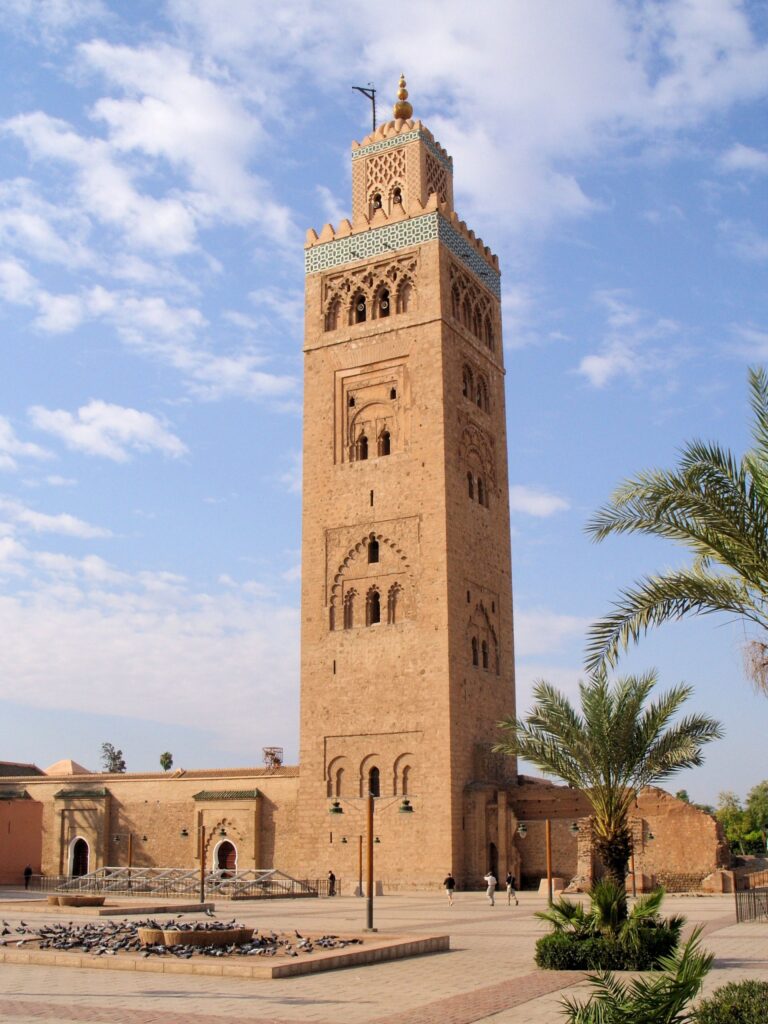
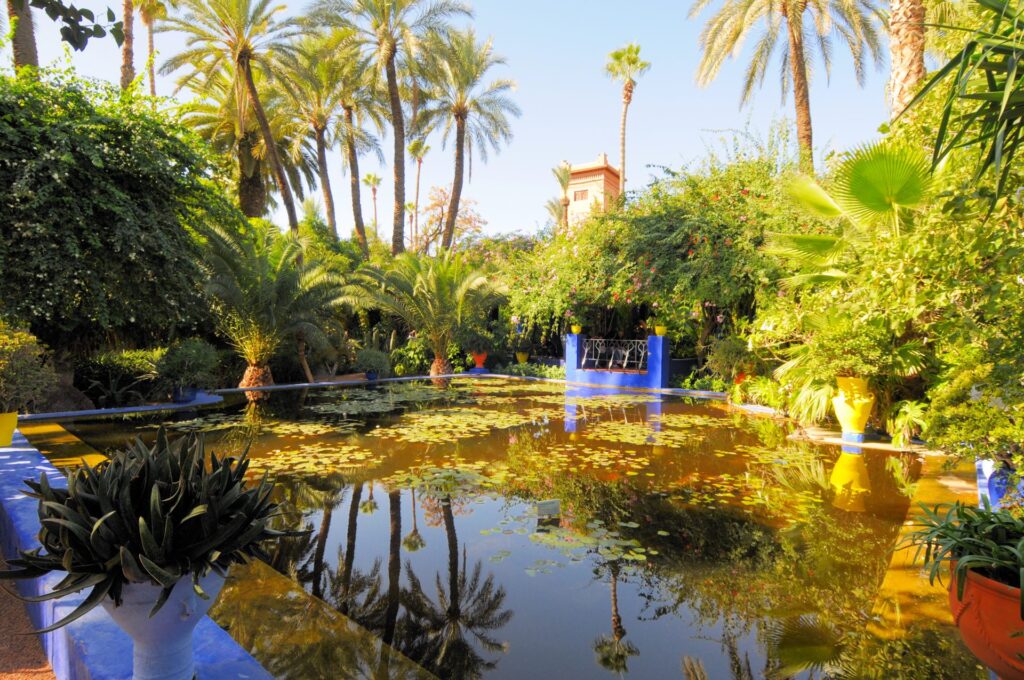
Marrakech is the city most first-time visitors picture when they imagine Morocco — the colour and noise of Jemaa el-Fnaa, the maze of the medina, rooftop mint tea at sunset. It’s also the question those same visitors type into Google the week before they fly: “is Marrakech safe?” The honest answer is yes — Marrakech is safe for tourists, and one of Morocco’s most visited cities. Millions of people pass through every year without any serious trouble. What a first-timer really needs isn’t reassurance that “nothing happens” — it’s knowing the handful of specifics that make the medina feel easy instead of overwhelming. That’s exactly what this guide covers.
The short answer
Marrakech is safe for tourists. Violent crime against visitors is uncommon, there’s a visible police and Tourist Police (Brigade Touristique) presence in the medina and around the main squares, and the overwhelming majority of trips are incident-free. The things you’re far more likely to meet are pickpockets in crowds, persistent vendors, and a few well-worn tourist scams — irritations, not dangers, and almost all of them disappear the moment you can recognise them.
Two habits make the biggest difference for a first-timer:
1. Keep your data on. Most “Marrakech went wrong” stories — getting lost in the souks, following a stranger who said your route was “closed,” not being able to call a taxi or look up your riad — come down to having no working phone. Landing with a Morocco eSIM active means you have maps, translation and a phone line from the airport. 2. Save the emergency numbers before you go (they’re at the bottom of this guide), and keep one-tap access to them.
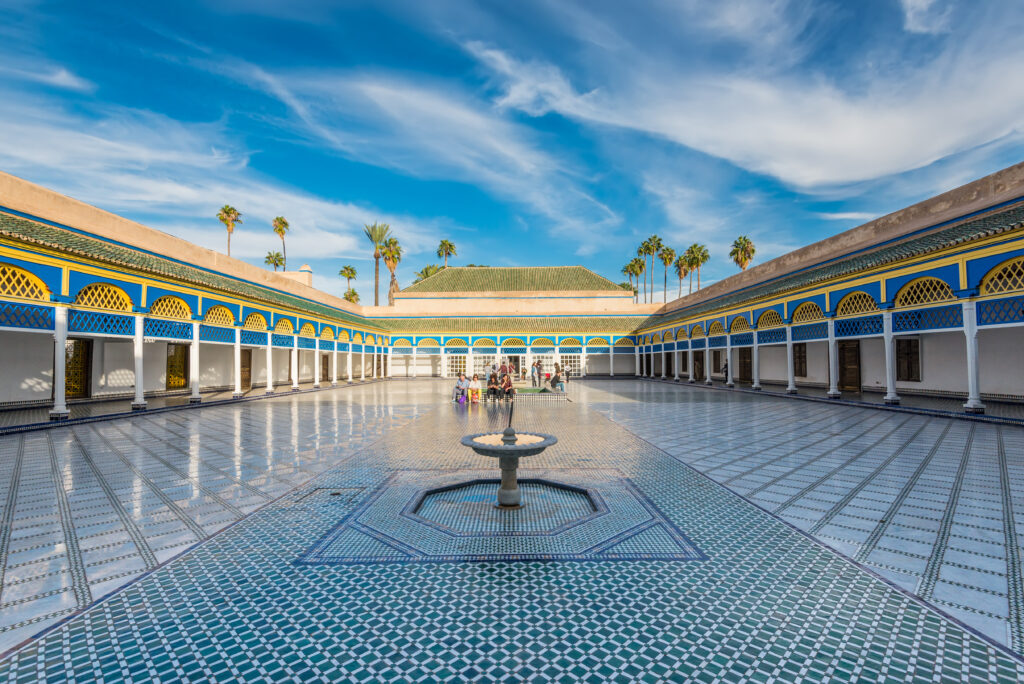
Navigating the medina and Jemaa el-Fnaa
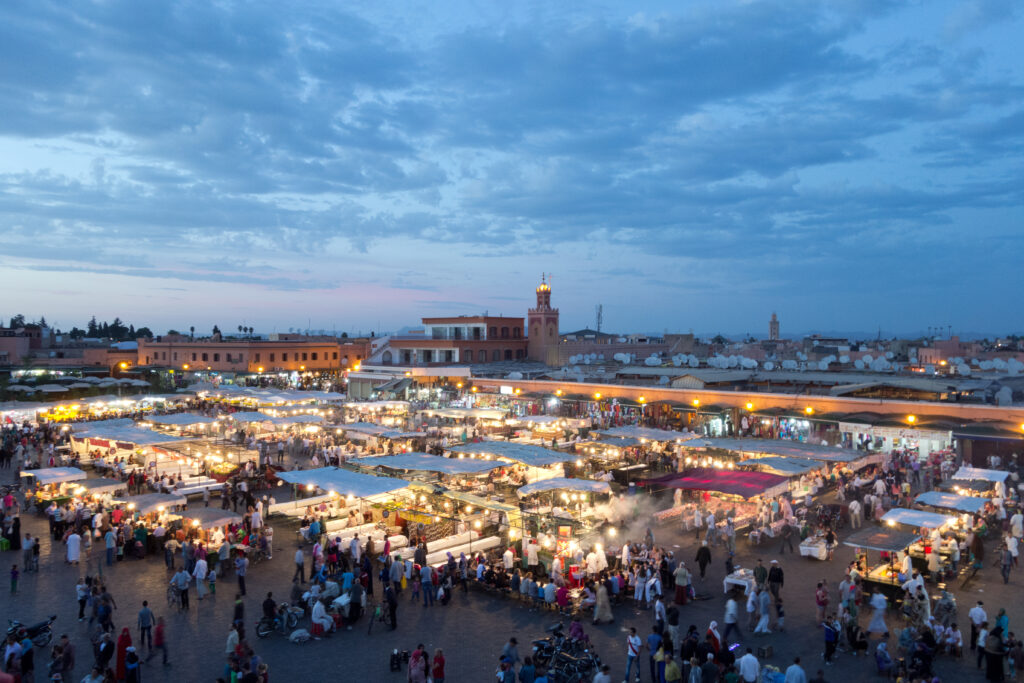
The old city (medina) is a walled maze of narrow, unsigned lanes, and getting briefly lost is part of the experience — not a safety problem. Jemaa el-Fnaa, the famous main square, is busy, theatrical and genuinely fun, especially as the food stalls open at dusk. It’s safe to walk, day and night, because it’s always crowded and well-policed.
A few first-timer pointers:
- Keep your phone and data on so you can drop a pin on your riad and navigate back. Screenshot the route from the nearest car-accessible gate, because the deepest lanes don’t take taxis.
- In the square, photos and “free” gifts are rarely free — see the scams section below.
- Walk with purpose. Looking lost and stopping to stare at your map invites “helpful” strangers. Step into a shop doorway to check directions instead.
Pickpockets and petty theft
The most common issue in Marrakech is pickpocketing and bag-snatching in crowded places — the thick of Jemaa el-Fnaa, the narrowest souk lanes, packed buses and busy taxi ranks. It’s opportunistic, not aggressive.
- Carry your phone and wallet in a front pocket or a zipped cross-body bag, never a back pocket or an open tote.
- Don’t flash expensive jewellery, big cameras or wads of cash.
- Be especially alert in the densest crowds and when a scooter passes close on a narrow lane.
The scams every first-timer should know
Marrakech’s tourist scams are famous precisely because they’re easy to sidestep once you know the script. A firm, friendly “la, shukran” (no, thank you) and walking on handles nearly all of them.
Someone attaches themselves to you, “shows you the way,” then demands payment. Decline politely and keep walking — use a licensed guide if you want one.
A stranger says the square or your route is shut “today,” then steers you to a shop or a dead end. Ignore it and trust your map — it’s almost never true.
A woman grabs your hand and starts henna, then asks for money. Keep hands to yourself and don’t let anyone start.
A performer puts an animal on you for a “free” photo, then charges. Don’t engage; agree any price first if you really want a photo.
No meter, inflated fare at the end. Use the meter or agree the fare before you get in (see below).
None of these are dangerous — they rely on politeness and surprise. For the full playbook, see our guide to common scams in Morocco.
Taxis: agree the fare or use the meter
Taxis in Marrakech are safe and useful, but fares are where most tourists overpay.
- Petit taxis (small, beige/khaki city cabs) are metered — ask the driver to switch the meter on (“compteur, s’il vous plaît”). Most short city hops are inexpensive on the meter.
- If a driver won’t use the meter, agree the price before you get in, not after.
- Grands taxis (older sedans, often shared for longer/airport runs) are negotiated — settle the fare up front.
- Keep small notes handy; “no change” is a classic way to round your fare up.
Marrakech at night
Marrakech at night is safe in the busy, well-lit areas — Jemaa el-Fnaa is arguably at its best after dark, and the main medina arteries and Gueliz (the modern town) stay lively. The smart-traveller move is simply to stick to populated, lit streets and avoid wandering solo into the deepest, empty back-lanes of the medina late at night, where it’s easy to get disoriented. Take a petit taxi back to your riad’s nearest gate rather than navigating dark alleys on foot, and keep your phone charged and connected so you can call a cab or pull up directions instantly.
Is Marrakech safe for solo and solo female travellers?
Yes — plenty of people travel Marrakech solo, including solo women, every year. The most commonly reported issue for women isn’t danger but unwanted attention and verbal comments from men in busy areas. It’s more wearing than threatening, and a confident, non-engaging response works best.
What helps:
- Dress modestly (shoulders and knees covered) to blend in and reduce attention.
- Don’t engage with catcallers — a flat “no” and walking on ends it faster than a conversation.
- Use trusted transport after dark — your riad’s recommended driver or a petit taxi rather than walking unfamiliar lanes alone.
- Keep someone informed of your plans, and keep your phone charged and connected so you can share your location or call for help instantly.
Quick safety tips for Marrakech
- Land with a working eSIM so you have maps, translation and a phone line from the airport.
- Save 112 and the other emergency numbers to your phone before you arrive.
- Keep valuables in a zipped, front-facing bag in crowds.
- Learn the five scams above — recognising them is 90% of avoiding them.
- Insist on the petit taxi meter, or agree the fare first.
- Screenshot your riad’s location and the nearest medina gate.
- After dark, stick to lit, busy streets and taxi door-to-gate.
- Carry travel insurance and know where the nearest hospital and pharmacy are.
Emergency numbers in Marrakech (save these now)
If you only remember one number, make it 112.
> Tip: Save these before you travel — in a real emergency you don’t want to be searching for a number. StaySafe Morocco’s one-tap SOS puts the correct Moroccan emergency numbers a single button away and logs your location, so you can reach the right service fast.
The bottom line
Yes, Marrakech is safe for tourists — as safe as most popular city-break destinations, and the issues you’ll actually meet are scams and pickpockets, not violence. Recognise the handful of well-known tricks, agree your taxi fares, keep your phone connected, dress respectfully, and stick to busy streets after dark. Do that, and Marrakech goes from intimidating to one of the most rewarding cities you’ll ever explore. For the wider national picture, see our pillar guide: Is Morocco safe for tourists?
Frequently asked questions
Is Marrakech safe for tourists? Yes. Marrakech is one of Morocco’s most visited cities and is safe for tourists, with low rates of violent crime against visitors. The main things to watch for are pickpockets in crowds and well-known tourist scams in the medina, both of which are easy to avoid with normal awareness. Always check your government’s current travel advice before you go.
Is Marrakech safe at night? Marrakech is safe at night in busy, well-lit areas — Jemaa el-Fnaa is at its liveliest after dark. Stick to populated, lit streets, avoid wandering solo into the deepest empty medina lanes late at night, and take a petit taxi back to your riad’s nearest gate rather than walking dark alleys.
Is Marrakech safe for solo female travellers? Yes, many women travel Marrakech solo every year. The most common issue is unwanted verbal attention rather than danger. Dressing modestly, projecting confidence, using trusted transport after dark, and staying connected all help.
What are the common scams in Marrakech? The usual ones are fake guides, “this way is closed” misdirection, unsolicited henna, paid photos with animals, and unmetered taxis. None are dangerous — a polite but firm “no, thank you” and walking on handles almost all of them. See our full guide to common scams in Morocco.
What’s the emergency number in Marrakech? Dial 112 from any mobile phone — it works even without a SIM card or credit and connects you to the nearest emergency service. You can also call 19 for police in the city, 177 for the Gendarmerie, and 15 for an ambulance or fire.
🛡 Land in Morocco already connected — and safe
Every StaySafe Morocco eSIM comes with free Family SOS: one tap to reach emergency help and share your live location with your family. No data cap, keep your number, from $20.79.
Get your eSIM + Family SOS →Explore Morocco — city guides
- Agadir
- Best Places to Visit in Morocco: A First-Timer’s Shortlist
- Best Things to Do in Marrakech: The Essential Guide
- Casablanca
- Chefchaouen
- El Jadida
- Essaouira Culture Guide: Gnaoua Music, Art & Local Life
- Essaouira
- Fes
- Marrakech in Summer: Pools, Heat & How to Stay Cool
- Marrakech
- Meknes
- Nador
- Ouarzazate
- Oujda
- Places to Visit in Marrakech: A First-Timer’s Day-by-Day Map
- Rabat
- Safi
- Tangier
- Tétouan