Essaouira is where Morocco slows down. Three hours west of Marrakech, this walled Atlantic port — once known as Mogador — trades the big-city buzz for sea air, blue fishing boats and one of the richest small-town cultures in North Africa: Gnaoua music echoing through whitewashed alleys, thuya-wood workshops perfumed with cedar-like resin, art galleries in old merchant houses, and a Jewish quarter whose story is being lovingly retold. If you’re wondering what Essaouira culture actually looks like up close — and how easy it is to enjoy it — this guide walks you through it.
The short answer on safety: Essaouira is one of the most relaxed places you can visit in Morocco. It’s compact, walkable and friendly, and solo travellers — women very much included — routinely name it their favourite stop. The tips below aren’t warnings; they’re the small bits of local know-how that let you give the music, the medina and the harbour your full attention. For the practical sightseeing rundown (where to stay, what to see, hospitals), see our companion Essaouira travel guide; this article is about the culture itself.
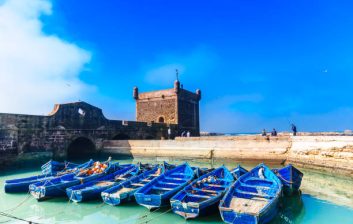
A city designed for trade, shaped by the sea
Essaouira’s character starts with an unusual fact: its medina was planned. In the 1760s, Sultan Sidi Mohammed ben Abdallah commissioned the European engineer Théodore Cornut to lay out a fortified port town, which is why the old city’s lanes run straighter and breathe easier than the labyrinths of Fes or Marrakech. That blend of Moroccan craft and European military planning earned the medina UNESCO World Heritage status in 2001.
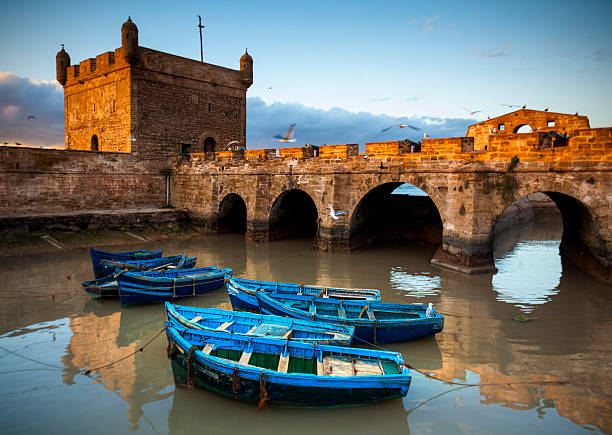
For two centuries Mogador was Morocco’s window on the Atlantic — a trading hub where Amazigh, Arab, Jewish and European merchants did business side by side, and caravans arrived from the Sahara carrying gold, salt and gum arabic. Walk the Skala de la Ville ramparts past the old bronze cannons and you can read that history in the stone. The cosmopolitan, easy-going temperament it created never left: this is a town used to welcoming outsiders, and you’ll feel it within an hour of arriving.
Gnaoua: the sound of Essaouira
If Essaouira has a heartbeat, it’s the deep, hypnotic bass of the guembri — the three-stringed lute at the centre of Gnaoua music. Gnaoua culture was carried north by sub-Saharan communities brought to Morocco centuries ago, and it evolved here into something unique: part spiritual ceremony, part trance, part celebration, driven by iron castanets called qraqeb and call-and-response song. In 2019 UNESCO added Gnaoua to its list of Intangible Cultural Heritage of Humanity.
Every June the Gnaoua and World Music Festival — running since 1998 — fills the town’s squares with maâlems (master musicians) jamming with jazz, blues and world-music artists from everywhere. It’s free, open-air and joyous; book accommodation months ahead if you’re coming for it. Outside festival season you’ll still catch live Gnaoua in the cafés around Place Moulay Hassan most evenings. It’s welcoming and utterly safe to wander between venues after dark — the squares stay lively — just keep your phone in a front pocket in festival crowds, the same as at any concert anywhere.
Getting there is part of the trip
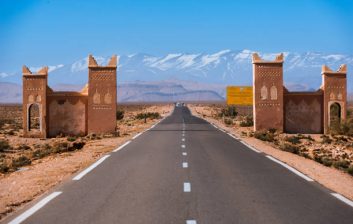
There’s no train line to Essaouira — Morocco’s rail network (covered in our guide to riding Al Boraq and ONCF like a local) stops at Marrakech, and from there it’s a comfortable ride west. Supratours and CTM run several coaches a day from Marrakech (about three hours, tickets are inexpensive and bookable online), or a grand taxi or private transfer does it in around two and a half. The road rolls through argan country — you may spot the famous tree-climbing goats — and roadside women’s cooperatives where argan oil is pressed by hand. Stopping at one is a genuinely good cultural detour: you’ll see the cracking and grinding process up close, and buying directly supports local women’s incomes.
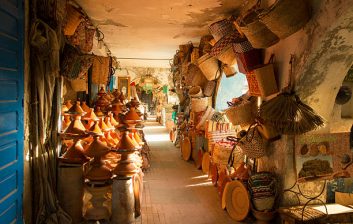
Thuya wood, galleries and the artisan medina
Essaouira’s signature craft is thuya — a gnarled, aromatic conifer that grows almost nowhere else on earth but this stretch of Moroccan coast. Local artisans turn its burl into gleaming marquetry boxes, chessboards and inlaid trays, and the woodturners’ workshops built into the ramparts below the Skala are open to visitors. Watch a craftsman work for ten minutes and the souvenir stalls suddenly make sense: you’re buying generations of skill, not a trinket.
The town is also one of Morocco’s art capitals. Dozens of galleries fill old merchant houses, many showing self-taught local painters whose swirling, colour-saturated style critics link to Gnaoua trance imagery. Add the music-history footnotes — Jimi Hendrix’s 1969 visit (the village of Diabat still dines out on it), Orson Welles filming Othello on the ramparts, Game of Thrones using the Skala as Astapor — and you get a small town with an outsized creative CV. Haggling here is soft-spoken and good-humoured compared with the big cities; a smile and a counter-offer at roughly half the opening price is a fine, respectful start.
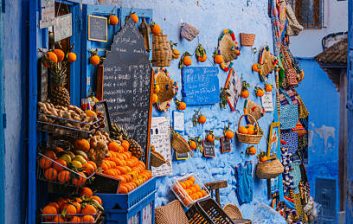
The harbour, the Mellah and everyday local life
Come mid-morning, Essaouira’s harbour is pure theatre: blue wooden boats rafted three deep, crates of silver sardines hitting the dock, gulls wheeling over the auction. Follow locals to the grill stands by the port and eat sardines straight off the charcoal — one of Morocco’s great cheap meals. It’s a working port, not a show, which is exactly why it’s worth your time.
Just inside the walls lies the Mellah, the old Jewish quarter. At its height, Jewish residents made up a large share of Mogador’s population — merchants, silversmiths, diplomats — and the town remains a moving symbol of Muslim–Jewish coexistence. Visit Bayt Dakira (“House of Memory”), the beautifully restored synagogue-museum that tells this story, and the Rabbi Haim Pinto synagogue, which still draws an annual pilgrimage. Wandering these quieter lanes is completely comfortable; if a friendly stranger insists on guiding you to a “special exhibition” or a cousin’s shop, a warm “la, shukran” (no, thank you) and a smile ends it — the gentle hustle here is mild, but our guide to common tourist scams in Morocco covers the classics if you want them decoded.
Culture with confidence: local know-how that helps
None of this requires nerves — it requires the same light preparation you’d bring to any coastal town. Morocco as a whole is a well-trodden, tourism-savvy country (our complete Morocco safety guide has the national picture), and Essaouira sits at the mellow end of its spectrum. A few specifics earn their place here:
Essaouira is nicknamed the “Wind City of Africa” for its alizé trade winds — glorious for the kitesurfers filling the bay, less so for casual swimmers. Currents can be strong; swim where locals swim, near the main beach’s watched section, and take lessons from a licensed kite school rather than freelancing.
Modest, casual dress is appreciated in the medina as everywhere in Morocco, but the real surprise is temperature: the wind makes evenings genuinely cool, even in August. Bring a layer — you’ll wear it.
Musicians, fishermen and artisans are used to cameras, but ask first — especially in the harbour and at Gnaoua performances. A few dirhams’ tip for a posed shot of a performer is normal and appreciated.
The June Gnaoua festival is a highlight, but rooms triple in price and sell out. If crowds aren’t your thing, come in May or September–October: same golden light, same music in the cafés, half the elbows.
Emergency numbers (they work here like everywhere in Morocco)
You will almost certainly never need these in Essaouira — but knowing them is what lets you relax. Morocco’s national emergency numbers work in every city, and 112 connects even without a SIM card or credit:
The Stay Safe Morocco app keeps all of these — plus your embassy’s contacts — one tap away, even offline: press SOS and it dials the right local number while logging your exact GPS location, so you can read it out instead of trying to describe an unnamed medina lane. Its Live Location feature also lets the people you choose back home follow along while you wander, which does wonders for a worried parent’s peace of mind.
Staying connected between the ramparts
Essaouira’s medina walls are thick and riad Wi-Fi is charmingly unreliable, so having your own data from the moment you arrive makes everything smoother — maps in the lanes, bus tickets back to Marrakech, translating a woodcarver’s story. The simplest route is an eSIM you install before you fly (here’s how an eSIM works if it’s new to you). Stay Safe Morocco’s plans start from $9 with 10 GB, 15 GB or 20 GB options — more than enough for two weeks of maps, messages and harbour photos.
The bottom line
Essaouira is the easiest deep-culture stop in Morocco: a UNESCO-listed planned medina, a living Gnaoua music tradition, world-class woodcraft, a moving Jewish heritage story and a fishing harbour that still smells of the real thing — all in a town small enough to learn in a day and gentle enough to relax in from hour one. Go for the June festival or the quiet golden shoulder seasons, respect the wind, learn four emergency digits you’ll never dial, and let the guembri do the rest. Morocco doesn’t ask for courage here. It asks for curiosity.
Frequently asked questions
Is Essaouira safe for solo female travellers? Yes — it’s widely considered one of Morocco’s most comfortable towns for women travelling alone. The medina is compact and lively into the evening, hassle is noticeably milder than in Marrakech, and locals are used to independent visitors. Normal city awareness (front-pocket phone in crowds, licensed taxis at night) is all it takes.
What is Gnaoua music and where can I hear it in Essaouira? Gnaoua is a UNESCO-recognised Moroccan musical and spiritual tradition with sub-Saharan roots, built around the bass guembri lute and iron qraqeb castanets. Hear it at the free Gnaoua and World Music Festival each June, or year-round in cafés and squares around Place Moulay Hassan.
How do I get to Essaouira from Marrakech? There’s no train — take a Supratours or CTM coach (about 3 hours, several departures daily) or a grand taxi/private transfer (about 2.5 hours). The road passes argan cooperatives that make a worthwhile cultural stop.
Can you swim in Essaouira? Yes, but the town’s famous trade winds create strong currents and choppy water, so swim at the watched main-beach section where locals swim. The conditions are ideal for kitesurfing and windsurfing — take lessons with a licensed school.
When is the best time to visit Essaouira for culture? June for the Gnaoua festival if you love crowds and live music; May or September–October for the same mild weather, gallery and workshop life, and café performances with far fewer visitors. Evenings are cool year-round, so pack a layer.
🛡 Land in Morocco already connected — and safe
Every StaySafe Morocco eSIM comes with free Family SOS: one tap to reach emergency help and share your live location with your family. No data cap, keep your number, from $20.79.
Get your eSIM + Family SOS →Before you go — related guides
- Is Morocco safe for tourists?
- Emergency numbers in Morocco
- Common scams in Morocco & how to avoid them
- How to get internet & mobile data in Morocco
- How to get a SIM / eSIM in Morocco
- Best eSIM for Morocco: plans & prices
- Buy a Morocco eSIM — no data cap, your dates
- Morocco eSIM setup: device check & activation
- What is an eSIM and how does it work?
Explore Morocco — city guides
- Agadir
- Best Places to Visit in Morocco: A First-Timer’s Shortlist
- Best Things to Do in Marrakech: The Essential Guide
- Casablanca
- Chefchaouen
- El Jadida
- Essaouira
- Fes
- Marrakech in Summer: Pools, Heat & How to Stay Cool
- Marrakech
- Meknes
- Nador
- Ouarzazate
- Oujda
- Places to Visit in Marrakech: A First-Timer’s Day-by-Day Map
- Rabat
- Safi
- Tangier
- Tétouan