Morocco is one of the easiest countries in the world to enjoy on a budget — and one of the easiest to get caught out in with the wrong wallet. The short version: Morocco still runs largely on cash, the local currency can only be bought once you arrive, and the difference between a smooth trip and a frustrating one usually comes down to a few small habits — carrying the right notes, choosing the right ATM, and knowing when to reach for a card at all.
This guide covers what to do before you fly, where to change money, how to withdraw without bleeding fees, where cards genuinely work, what to tip, and what to do if a card goes missing. Nothing here requires you to be nervous. It just requires you to be prepared — which is the whole point.
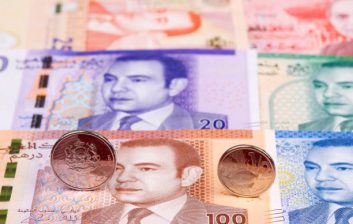
The dirham is a closed currency — what that actually means
Morocco’s currency is the Moroccan dirham (MAD, often written DH), and it’s a closed currency. In practice: your bank at home almost certainly can’t sell you dirham before you fly, and there are limits on how much you may carry out of the country when you leave. Don’t waste time hunting for it in advance — you’re meant to change or withdraw once you land, and that system works perfectly well.
The rate is regulated by Morocco’s central bank, so you’ll find broadly similar rates at airports, banks and licensed exchange offices — there’s no clever hack that beats it by much. As a rough mental anchor, the dirham has been hovering around the high-single digits to ten per US dollar and around ten to eleven per euro; check the live rate on the day rather than trusting a number in any article, including this one. Bring clean, undamaged euro, dollar or sterling notes if you plan to exchange cash — torn or heavily marked notes are often refused.
One habit worth adopting on day one: spend your dirham down before you fly home. Keep a modest amount for the airport and change the rest back at a licensed office (keep an exchange receipt — some offices ask for it when converting back).
Where to change money — in order of convenience
Change a small starter amount — enough for a taxi, water and dinner. Rates are fine, and having cash in hand before you leave the terminal removes the first friction point of the trip.
Found all over city centres and tourist districts, usually commission-free with the rate posted in the window. Look for the official licence displayed inside and always count your notes at the counter.
Reliable but slower, and hours are limited — typically weekday mornings and early afternoons, with shorter hours on Fridays and during Ramadan. Bring your passport.
Convenient and safe, but the rate is usually the least favourable. Fine for a small top-up on a Sunday evening; not where you’d change your whole week’s budget.
Unlicensed “better rate” offers on the pavement are the oldest trick in the book — short counts and folded notes. There’s no upside worth the risk when licensed offices are everywhere.
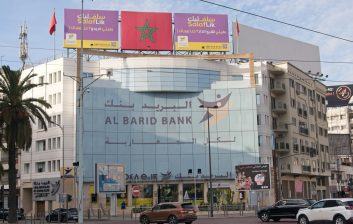
ATMs: how to withdraw without losing money to fees
ATMs (locally, guichets automatiques) are plentiful in every city, at airports, in most large towns and at many train stations. The major networks — Attijariwafa Bank, Bank of Africa, Banque Populaire, CIH, Société Générale and Al Barid Bank at post offices — all accept foreign Visa and Mastercard, with menus in English and French.
Three habits save real money and real hassle:
Always choose to be charged in dirham. If the screen offers to convert to your home currency “for your convenience”, decline it. That’s dynamic currency conversion, and the built-in margin is worse than your own bank’s rate — every single time.
Withdraw fewer, larger amounts. Many Moroccan ATMs now add a local withdrawal fee of roughly 20–40 dirham on top of whatever your own bank charges, so four small withdrawals cost four times as much as one sensible one.
Use machines attached to a staffed bank branch, during opening hours. If a machine ever retains your card, you can walk straight inside and speak to someone rather than staring at a shuttered wall on a Sunday. Tell your bank you’re travelling before you leave, and carry a second card from a different provider in a different bag.
Where cards actually work — and where they don't
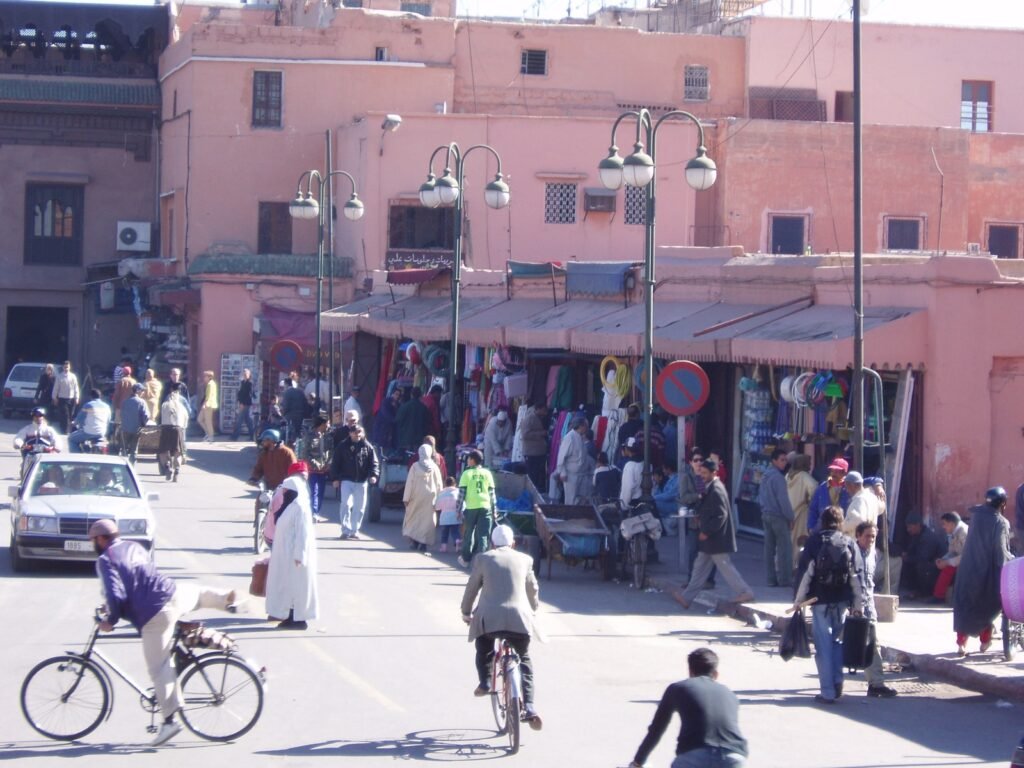
Card acceptance in Morocco is far better than it was a decade ago, but it’s still uneven, and the places most likely to make your trip memorable are the ones most likely to be cash-only. Plan for a cash-first day with a card as backup, not the other way round.
- Usually fine with a card: hotels, riads with a proper reception, supermarkets (Marjane, Carrefour, BIM), petrol stations, chain pharmacies, mid-range and upmarket restaurants in big cities, ONCF train tickets bought online, museums and larger ticketed sites.
- Cash, essentially always: petit taxis and grand taxis, souk stalls and artisan workshops, street food and small cafés, hammams, public toilets and car park attendants, tips, most guides and drivers, riads in smaller towns, and entry to many local sites.
- Contactless is increasingly common in city supermarkets and chains, but treat it as a bonus rather than a plan.
- Card surcharges of a few per cent are sometimes added by smaller hotels and shops. Ask before you hand the card over — it’s a normal question, not a rude one.
Small notes are the real currency
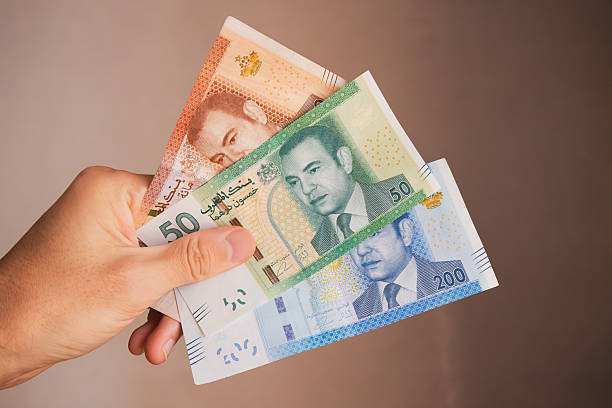
Dirham notes come in 20, 50, 100 and 200; coins run 1, 2, 5 and 10 dirham, plus small centime pieces. ATMs love handing out 200s, and almost nobody you actually want to buy something from can break one. A petit taxi driver, a man selling you a 4-dirham loaf of bread, a car park attendant — none of them will have change for a 200. Break big notes at supermarkets, petrol stations and busy cafés, and hoard your 20s like they’re the good stuff. They are.
Two quirks of everyday pricing are worth knowing, because they confuse almost every first-time visitor. Some sellers, especially older ones and in certain regions, quote in rial — where 20 rial equals 1 dirham. Others quote in centimes, where 100 centimes make a dirham, so “cinquante mille” (fifty thousand) means 50,000 centimes, or 500 dirham. If a number sounds wildly wrong, it probably is a different unit. Just ask, calmly, “en dirhams?” — it’s a completely normal question and the answer comes instantly.
Haggling in the souk is a social exchange, not a battle. Decide what the thing is worth to you, make a friendly counter, and be genuinely willing to walk away with a smile. For the handful of pressure tactics worth recognising in advance, our guide to common tourist scams in Morocco and how to avoid them covers them plainly.
Tipping in Morocco: simple, generous, unstressful
Tipping is woven into daily life here, but the amounts are small and nobody expects mathematics. The guiding principle is to round up and to carry coins so you can.
Round up, or leave 2–5 dirham for a coffee or mint tea. Small, frequent and genuinely appreciated.
Around 10% at a sit-down restaurant if service isn’t already included. Leave it in cash even when you pay the bill by card.
Round up to the nearest 5 or 10 dirham. Agree a petit taxi fare before you get in, or ask for the meter — see our Marrakech airport to medina guide for what real fares look like.
50–100 dirham for a good half-day guide, more for a full day or a long desert drive. Hand it over directly at the end.
10–20 dirham for a porter, and a note left for housekeeping at the end of your stay. Riad staff often do everything, so tip the house at checkout.
Your money lives on your phone — so protect the connection
Here’s the part most money guides skip. Your bank’s fraud team may text you a one-time code before approving a foreign transaction. Your banking app needs data to open. Your card-freeze button lives behind a login. If your phone has no signal and no data, every one of those tools is offline exactly when you need it.
The clean fix is a travel eSIM: it installs as a second line, so you get Moroccan data the moment you land while your original SIM stays in the phone and can still receive your bank’s SMS codes. Our packs run 10 GB, 15 GB and 20 GB, from $9 — plenty for maps, translation and banking across a normal trip. If you’re weighing the options, the Morocco eSIM buying guide lays them out side by side.
The Stay Safe Morocco app covers the offline half of the problem. Morocco’s emergency numbers and your embassy’s details — chosen by your nationality — are stored on the device and readable with no data at all, which matters on the evening you’ve lost a wallet with your cards and your hotel card in it.
If a card is lost, swallowed or stolen
It’s uncommon, and it’s completely recoverable. Work through it in order rather than all at once.
- Freeze the card in your banking app first — before you do anything else, and before you start looking for it. Freezing is reversible; a compromised card is not.
- If an ATM retained the card, go into the branch it’s attached to during opening hours with your passport. This is routine and staff deal with it constantly.
- If it was stolen, report it to the police so you have a report number for your bank and any insurance claim. Dial 19 in cities and towns, or 177 for the Gendarmerie Royale in rural areas and on highways. Morocco also has a dedicated tourist police presence in the main tourist cities.
- Fall back on your backup: a second card kept separately, plus a small emergency reserve of euro or dollar cash tucked in your luggage. This is the single habit that turns a crisis into an inconvenience.
- Your embassy or consulate can help with emergency documents if your passport went with the wallet.
A simple money plan for a 10-day trip
You don’t need a spreadsheet. You need a rhythm.
- Before you fly: tell your bank you’re travelling, check your card’s foreign transaction fee, pack a second card in a different bag, and install your eSIM so data starts working on landing.
- On arrival: change a starter amount at the airport, or make one ATM withdrawal from a bank machine in arrivals. Ask for smaller notes if there’s a counter.
- Every few days: one larger ATM withdrawal rather than several small ones. Break a 200 at a supermarket the same day.
- Daily: carry what you’ll plausibly spend plus a little, and leave the rest in the hotel or riad safe. Keep a 20 and some coins in a front pocket, separate from your main wallet, so you’re never opening everything on a busy street.
- Before you fly home: spend down your dirham and change any meaningful surplus back at a licensed office.
The bottom line
Money in Morocco isn’t complicated — it’s just different from what most visitors are used to. Buy your dirham after you arrive, keep more cash on you than you would at home, decline dynamic currency conversion at every ATM, hoard small notes, tip in coins, and carry a second card somewhere separate. Do those six things and the subject stops being a topic at all; it becomes the thing you barely think about while you’re eating grilled sardines on a Essaouira harbour wall.
That’s the aim: fewer unknowns, more of the trip. If you’d like the wider picture before you go, our complete Morocco safety guide for 2026 covers the rest of the practical ground with the same calm approach.
Frequently asked questions
Can I buy Moroccan dirham before I travel? Generally no. The dirham is a closed currency, so most banks and exchange offices outside Morocco can’t sell it to you. Change money or withdraw from an ATM after you arrive — there are exchange counters and cash machines in every international arrivals hall.
How much cash should I carry each day in Morocco? For most travellers, roughly 300–600 dirham a day covers taxis, meals, entry fees and tips comfortably, more if you’re shopping in the souks or hiring guides. Carry what you expect to spend plus a small buffer, keep the rest in your hotel or riad safe, and split your cash between two places.
Do I need cash in Morocco, or can I just use my card? You need cash. Hotels, supermarkets and mid-range restaurants in cities usually take cards, but taxis, souk stalls, street food, hammams, small cafés and tips are cash-only. Plan cash-first with your card as backup.
Are ATMs safe to use in Morocco? Yes. Stick to machines attached to a staffed bank branch and use them during opening hours, so you can walk inside if a card is retained. Always choose to be charged in dirham rather than your home currency, and expect a local withdrawal fee of roughly 20–40 dirham at many banks.
What happens if my card is stolen and my phone has no data? Freeze the card the moment you have any connection, which is why a travel eSIM giving you data from landing is worth the small cost. Report a theft to the police on 19 in cities or 177 in rural areas, and use 112 for any genuine emergency — it works even without a SIM or credit. The Stay Safe Morocco app keeps those numbers and your embassy’s contact details readable offline on your phone.
🛡 Land in Morocco already connected — and safe
Every StaySafe Morocco eSIM comes with free Family SOS: one tap to reach emergency help and share your live location with your family. No data cap, keep your number, from $20.79.
Get your eSIM + Family SOS →Before you go — related guides
- Is Morocco safe for tourists?
- Emergency numbers in Morocco
- Common scams in Morocco & how to avoid them
- How to get internet & mobile data in Morocco
- How to get a SIM / eSIM in Morocco
- Best eSIM for Morocco: plans & prices
- Buy a Morocco eSIM — no data cap, your dates
- Morocco eSIM setup: device check & activation
- What is an eSIM and how does it work?
Explore Morocco — city guides
- Agadir
- Best Places to Visit in Morocco: A First-Timer’s Shortlist
- Best Things to Do in Marrakech: The Essential Guide
- Casablanca
- Chefchaouen
- El Jadida
- Essaouira Culture Guide: Gnaoua Music, Art & Local Life
- Essaouira
- Fes
- Marrakech in Summer: Pools, Heat & How to Stay Cool
- Marrakech
- Meknes
- Nador
- Ouarzazate
- Oujda
- Places to Visit in Marrakech: A First-Timer’s Day-by-Day Map
- Rabat
- Safi
- Tangier
- Tétouan