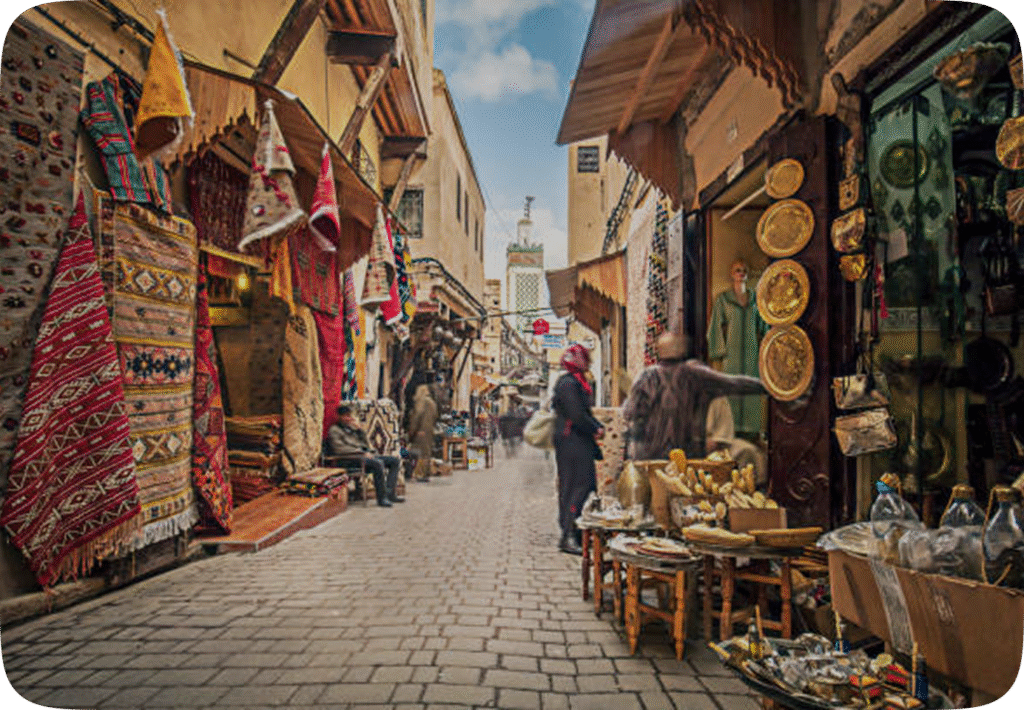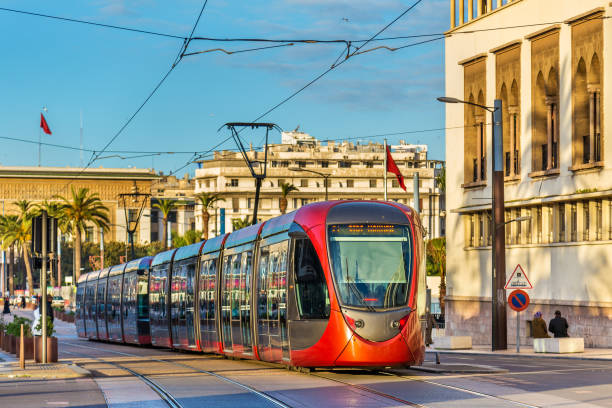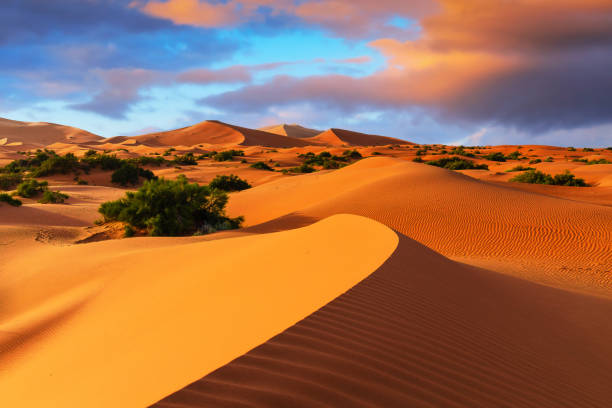
Most “places to visit in Marrakech” lists give you twenty sights in no order at all, which is how first-timers end up crossing the medina four times in one day in 38°C heat. Marrakech is small — the walled old city is roughly 600 hectares — but it is dense, and the walk between two sights that look close on a map can take twenty-five minutes through crowded souk lanes. So this guide is organised the way you’ll actually move: by quarter, in the order that makes sense, with the time of day each one is best.
Four zones cover almost everything worth seeing: the central medina around Jemaa el-Fna, the Kasbah and Mellah in the south, the gardens and Gueliz in the new city, and the Palmeraie and the Atlas foothills beyond. Do one zone per half-day and you’ll see more, walk less, and spend far less on taxis. If you’re still deciding whether to come at all, our complete Morocco safety guide covers the national picture, and Is Marrakech Safe? answers the city-specific questions.
Zone 1 — The central medina: Jemaa el-Fna, Koutoubia and the palaces
Start here, and start early. Jemaa el-Fna is two different places depending on the hour: at 9am it’s a wide, calm square with orange juice carts and a few water sellers; after sunset it fills with food stalls, gnaoua musicians and storytellers, and becomes the thing everyone photographs. See it twice — morning for the space, evening for the life.
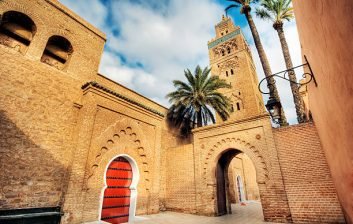
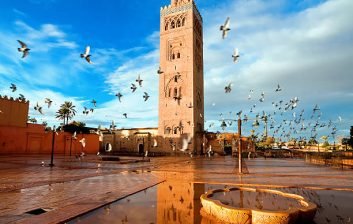
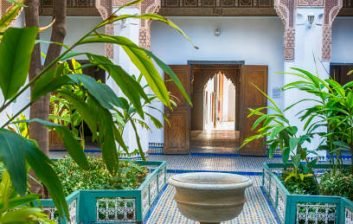
The Koutoubia Mosque (12th century, 77-metre minaret) is a five-minute walk west. Non-Muslims can’t enter, but the gardens around it are public, free and shaded — the best place in the medina to sit for ten minutes. From there, walk south into the Bahia Palace, a 19th-century courtyard palace with painted cedar ceilings, and the Ben Youssef Madrasa to the north, a 14th-century Quranic school reopened after a long restoration and, for many visitors, the single most beautiful interior in the city. The Musée de Marrakech and the small Almoravid Koubba sit in the same square as the madrasa, so you can do all three in one loop.
Zone 2 — The Kasbah and Mellah: tombs, ruins and the old Jewish quarter
The southern quarter is quieter than the souks and holds three sights within a few hundred metres of each other. The Saadian Tombs — sealed up in the 17th century and only rediscovered in 1917 — are small but extraordinary: the Chamber of the Twelve Pillars is carved Carrara marble and gold-flecked stucco. Go at opening or late afternoon; midday queues are the longest of any site in the city.
A short walk away, El Badi Palace is the opposite experience — a vast roofless ruin where storks nest on the ramparts and you can climb up for one of the best free-standing views over the medina. Then the Mellah, the historic Jewish quarter, with the restored Lazama Synagogue and the Miâara cemetery: a genuinely different architectural texture, and the least-visited corner of old Marrakech. Finish at Bab Agnaou, the carved 12th-century gate, which is the prettiest way to leave the quarter on foot.
What things actually cost, and how to plan the day
Marrakech monument entry is inexpensive and almost always cash-only in dirhams. Budget roughly 70–100 MAD (about $7–10) per major monument, with the Jardin Majorelle at the top end and small sites lower. A few practical rules that save a lot of friction:
Bring 20 and 50 dirham notes for entry tickets, taxis and tips. Change for a 200 is often genuinely unavailable, and ATMs sit mostly on the medina’s edges and in Gueliz.
Jardin Majorelle and the YSL Museum sell timed tickets online. Turning up without one in high season can mean an hour standing in the sun for no reason.
This is the local rhythm, not a compromise. Summer afternoons regularly pass 40°C — see our Marrakech in summer guide for where to swim and cool off.
Petit taxis are metered; ask for the meter, or settle the price before you get in. Our airport-to-medina guide lists the real fares for that specific run.
Medina addresses often don’t resolve properly in mapping apps. Drop a pin on the nearest gate or landmark on arrival, and save an offline map of the old city.
Zone 3 — Gardens: Majorelle, Le Jardin Secret and the Menara
Jardin Majorelle is the most photographed place in Marrakech for a reason — the cobalt blue Jacques Majorelle mixed himself, bamboo groves, and a cactus collection gathered over forty years. It’s compact, so an hour is enough; the adjoining Musée Yves Saint Laurent and the small Berber Museum are worth adding to the same visit. Book the first slot of the day if you want photographs without crowds.
Inside the medina, Le Jardin Secret on Rue Mouassine is the one people miss: a restored riad garden with an Islamic-geometry water system still fed by the old khettara channels, and a tower you can climb for a rooftop view. And out west, the Menara Gardens — an olive grove around a 12th-century reservoir with a pavilion reflected in the water — are free, huge, and where Marrakchis actually go at the end of the day. It’s the least touristy hour you’ll spend in the city.
Zone 4 — Gueliz: the modern city most visitors never see
Gueliz is the new town, built in the 1910s, and it’s where Marrakech goes about its ordinary life: wide boulevards, pavement cafés, concept stores, and the city’s contemporary art scene. If the medina has worn you down — and on day three it usually has — an afternoon here resets everything.
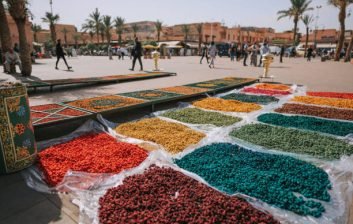
Worth your time: the MACAAL contemporary African art museum, the Comptoir des Mines gallery on Avenue Mohammed V, and the Marché Central for spices and produce at prices nobody is negotiating theatrically. Sit outside for a mint tea and watch the traffic; it’s the version of the city that doesn’t appear on any highlights list, and it’s often the one visitors remember most fondly.
Zone 5 — Beyond the walls: Palmeraie, the Atlas and Ourika
If you have a third or fourth day, leave the city. The Palmeraie is a palm grove on the northern edge — camel rides, quad tracks and a handful of good pool day-passes, about 20 minutes by taxi. Closer to real countryside, the Ourika Valley is roughly an hour south into the Atlas foothills, with riverside cafés and a walk up to the Setti Fatma waterfalls.
Imlil, about 90 minutes away at 1,740m, is the trailhead for Mount Toubkal and a good day out even if you never climb anything. And if you’d rather swap mountains for ocean, Essaouira is a two-and-a-half-hour drive west — see our Essaouira culture guide. For any of these, agree the full-day driver price in advance and confirm what’s included; a grand taxi to Ourika and back is a normal, well-established arrangement.
Getting around, and staying connected while you do
Everything in the medina is walkable, and that’s the point — the souks reveal themselves on foot. Outside the walls, petit taxis are cheap and everywhere. What genuinely changes the day is data: medina navigation, translating a menu, calling your riad when a lane dead-ends. A travel eSIM installs before you fly and connects the moment you land, which is why we sell them in 10 GB, 15 GB and 20 GB packs from $9 (10 GB includes about an hour of calls; 15 GB and 20 GB about two hours). If you’re weighing it against a local SIM, the Morocco eSIM buying guide compares them properly.
The Stay Safe Morocco app is built for exactly this kind of exploring. Every local emergency number is stored offline and dialled in one tap, your embassy is listed by your own nationality, and one-tap SOS logs your location and calls the right Moroccan emergency service — no fumbling for a number you’ve never had to learn. Trip Planner arrival check-ins can let your Trusted Circle know you got somewhere safely. None of it needs you to be online to open it.
Morocco's emergency numbers
Worth saving before you go. 112 works from any mobile, even without a SIM card or credit.
A three-day route that actually works
- Day 1 — Jemaa el-Fna early, Koutoubia gardens, Ben Youssef Madrasa and the museum square, lunch, rest through the heat, souks late afternoon, back to the square after dark for the food stalls.
- Day 2 — Saadian Tombs at opening, El Badi Palace, the Mellah and Lazama Synagogue, Bab Agnaou, then Bahia Palace on the way back north.
- Day 3 — Jardin Majorelle first slot, YSL Museum, lunch in Gueliz, MACAAL or the Marché Central, Menara Gardens at sunset.
- Extra day — Ourika Valley or Imlil with a pre-agreed grand taxi, or a Palmeraie pool afternoon if you want to do nothing at all.
For a deeper cut on activities rather than places, our essential things to do in Marrakech guide goes further on hammams, cooking classes and food.
The bottom line
Marrakech rewards planning by geography, not by wishlist. Group your sights into the four quarters, take the early mornings seriously, rest through the hot middle of the day like everyone who lives here does, and you’ll finish the trip having seen more and rushed less. The city is welcoming, well-trodden and easy to be a visitor in — a little navigation confidence and an offline map do most of the work. Come with a rough shape for each day and let the souks disrupt it; that’s the part you’ll be telling people about later.
Frequently asked questions
How many days do you need in Marrakech? Three full days covers the medina, the Kasbah quarter and the gardens comfortably. A fourth lets you add the Ourika Valley, Imlil or a slow Palmeraie afternoon without cutting anything short.
What is the best time of year to visit Marrakech? March to May and September to November are ideal — warm, dry and walkable. July and August regularly exceed 40°C, which is fine if you plan around it with early starts and a pool in the afternoon.
Can non-Muslims enter the Koutoubia Mosque? No — the Koutoubia is an active mosque and closed to non-Muslims, as most working mosques in Morocco are. The gardens surrounding it are public and free, and the minaret is best photographed from there or from Place Jemaa el-Fna.
Do I need cash for Marrakech attractions? Mostly yes. Monument entry is generally cash-only in dirhams at around 70–100 MAD per site, and taxis and market stalls are cash too. Card payment works in Gueliz restaurants, hotels and larger shops.
Is it easy to get lost in the Marrakech medina? The lanes are unsigned and wind a lot, so yes, briefly — almost everyone does. Save an offline map before you go in, drop a pin on your riad and on the nearest gate, and keep mobile data on your phone so you can always re-orient or call your accommodation.
🛡 Land in Morocco already connected — and safe
Every StaySafe Morocco eSIM comes with free Family SOS: one tap to reach emergency help and share your live location with your family. No data cap, keep your number, from $20.79.
Get your eSIM + Family SOS →Before you go — related guides
- Is Morocco safe for tourists?
- Emergency numbers in Morocco
- Common scams in Morocco & how to avoid them
- How to get internet & mobile data in Morocco
- How to get a SIM / eSIM in Morocco
- Best eSIM for Morocco: plans & prices
- Buy a Morocco eSIM — no data cap, your dates
- Morocco eSIM setup: device check & activation
- What is an eSIM and how does it work?
Explore Morocco — city guides
- Agadir
- Best Places to Visit in Morocco: A First-Timer’s Shortlist
- Best Things to Do in Marrakech: The Essential Guide
- Casablanca
- Chefchaouen
- El Jadida
- Essaouira Culture Guide: Gnaoua Music, Art & Local Life
- Essaouira
- Fes
- Marrakech in Summer: Pools, Heat & How to Stay Cool
- Marrakech
- Meknes
- Nador
- Ouarzazate
- Oujda
- Rabat
- Safi
- Tangier
- Tétouan