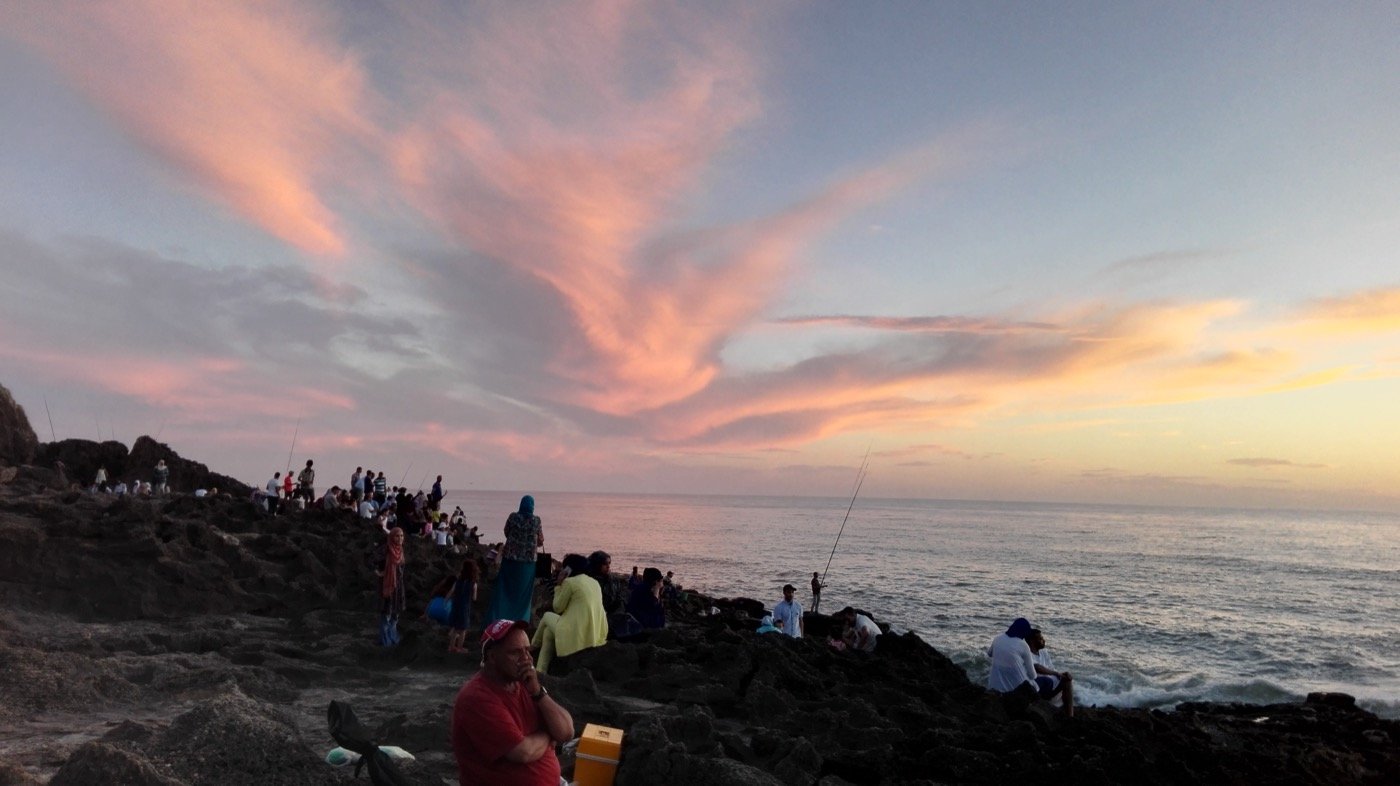
Yes — Tangier is safe for visitors, and it has been for a long time. It is a working port city of about a million people, so ordinary city sense applies: keep your pockets closed in a crowd, settle the taxi question before the wheels turn, and don’t follow a stranger down a lane you can’t find on a map. Do those three things and the city is yours — the Kasbah at sunset, Café Hafa above the Strait, grilled sardines on the corniche, Spain sitting on the horizon like a rumour.
Most of what is written about Tangier online is describing a city that stopped existing around twenty years ago. The Interzone smuggling port of the old novels has spent two decades becoming something else: a rebuilt seafront promenade, a marina where the freight terminal used to be, a high-speed train to Casablanca, and a container port moved 40 km east to Tanger Med. What follows is the honest version — which neighbourhoods to sleep in, which ones to leave alone, the exact scams you will actually meet, how taxis really work, what changes after dark, and the numbers to save before you fly.
The short answer
Tangier is a safe city to visit, including for first-timers and for solo travellers. Violent crime against tourists is rare. What visitors genuinely run into is commercial pressure — unlicensed guides, insistent shopkeepers, a taxi driver whose meter has mysteriously failed — and opportunistic pickpocketing in crowded places. All three are manageable, and none of them are a reason to skip the city.
Here is the fuller picture. Tangier’s tourist areas — the Kasbah, the medina’s main spine, Boulevard Pasteur, the corniche — have a visible police presence, including a tourist brigade, and locals are quick to step in when someone is bothering a visitor; a shopkeeper telling a hustler to move along is a very Tangier scene. Petty theft happens where crowds are dense: the Grand Socco on a market morning, a packed bus, the Casabarata flea market. Scams are hustles, not muggings, and every one of them ends the moment you keep walking.
The realistic risk profile of a week here looks a lot like a week in Naples, Marseille or Lisbon: mind your phone, mind your bag, don’t get into a vehicle you didn’t choose. If you want the national picture rather than the city one, we cover it in our complete Morocco safety guide. And if you’ve already decided you’re going and want the things to see, that lives in our Tangier travel guide — this page is about the other question.
Staying connected in Tangier
A working phone is the most practical safety tool you will carry here. Tangier’s medina is a genuine maze, taxi negotiations go better when you can show a driver a pin, and if anything goes wrong you want to dial 19 without hunting for a café with Wi-Fi.
Airport Wi-Fi and hotel Wi-Fi are not a plan — they stop at the door. A Morocco eSIM is: you pick your trip length, it arrives as a QR code by email, and it is live the moment you land at Ibn Battouta. Unfamiliar with the format? Here’s what an eSIM actually is. Set it up at home, not in the arrivals hall.
Where to stay, and where to be careful
This is the part most guides refuse to write. Tangier is not one place — it is a compact old city on a hill, a French-built modern centre, a long seafront, and a ring of large residential districts that no visitor has any reason to enter. Where you sleep decides how your evenings feel more than anything else you choose.
Below are real neighbourhoods in three honest tiers. Read the third tier the right way: those are not dangerous places, they are simply not visitor places. Ordinary families live good lives there. There is just nothing in them for you, and you would be extremely conspicuous.
Comfortable day and night
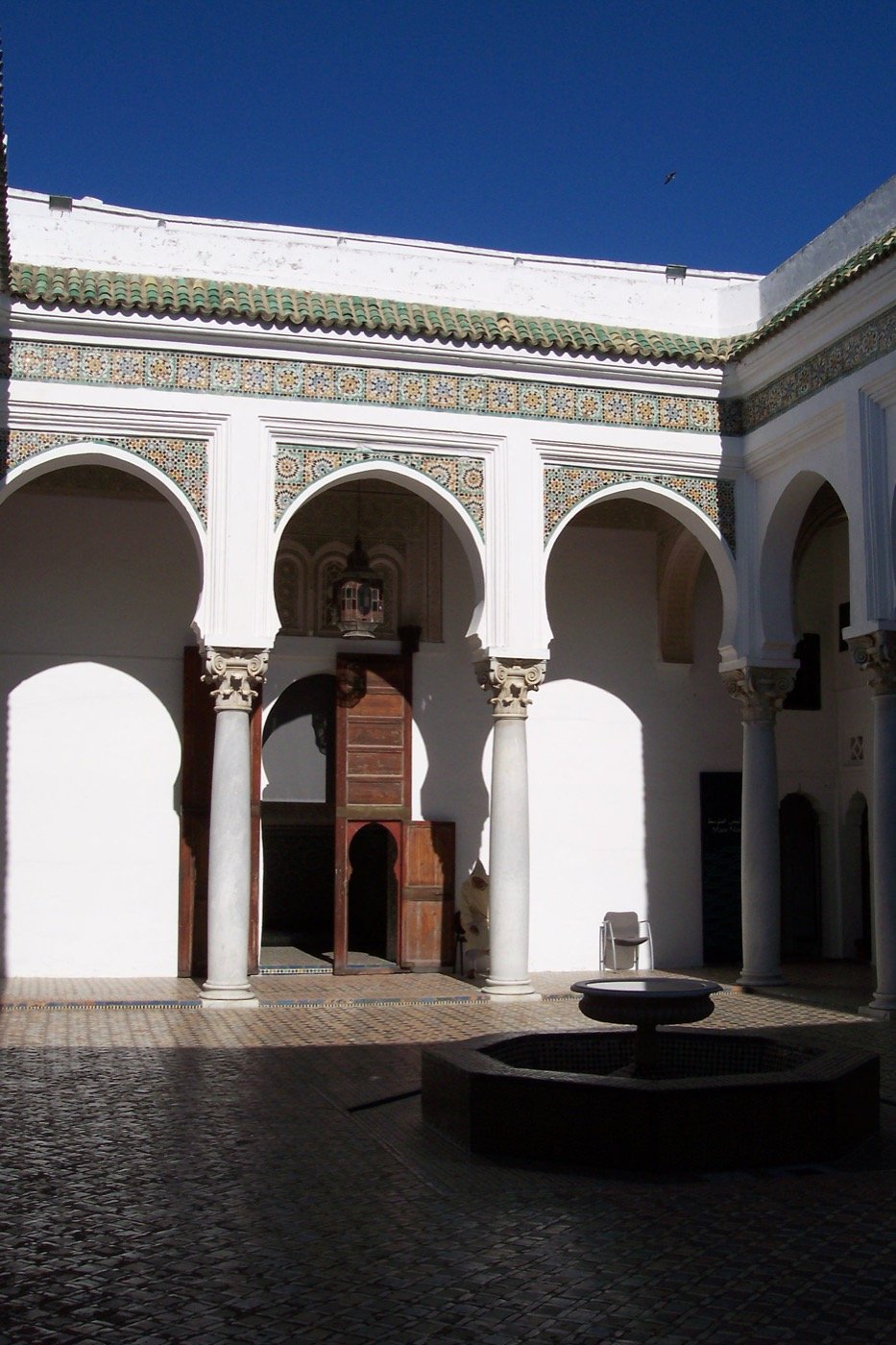
The walled crown of the old city, full of small riads and quiet lanes with almost no traffic. Residents are around at all hours and it feels village-like after dark. Lanes are narrow and dimly lit, so save an offline map and note your riad’s door.
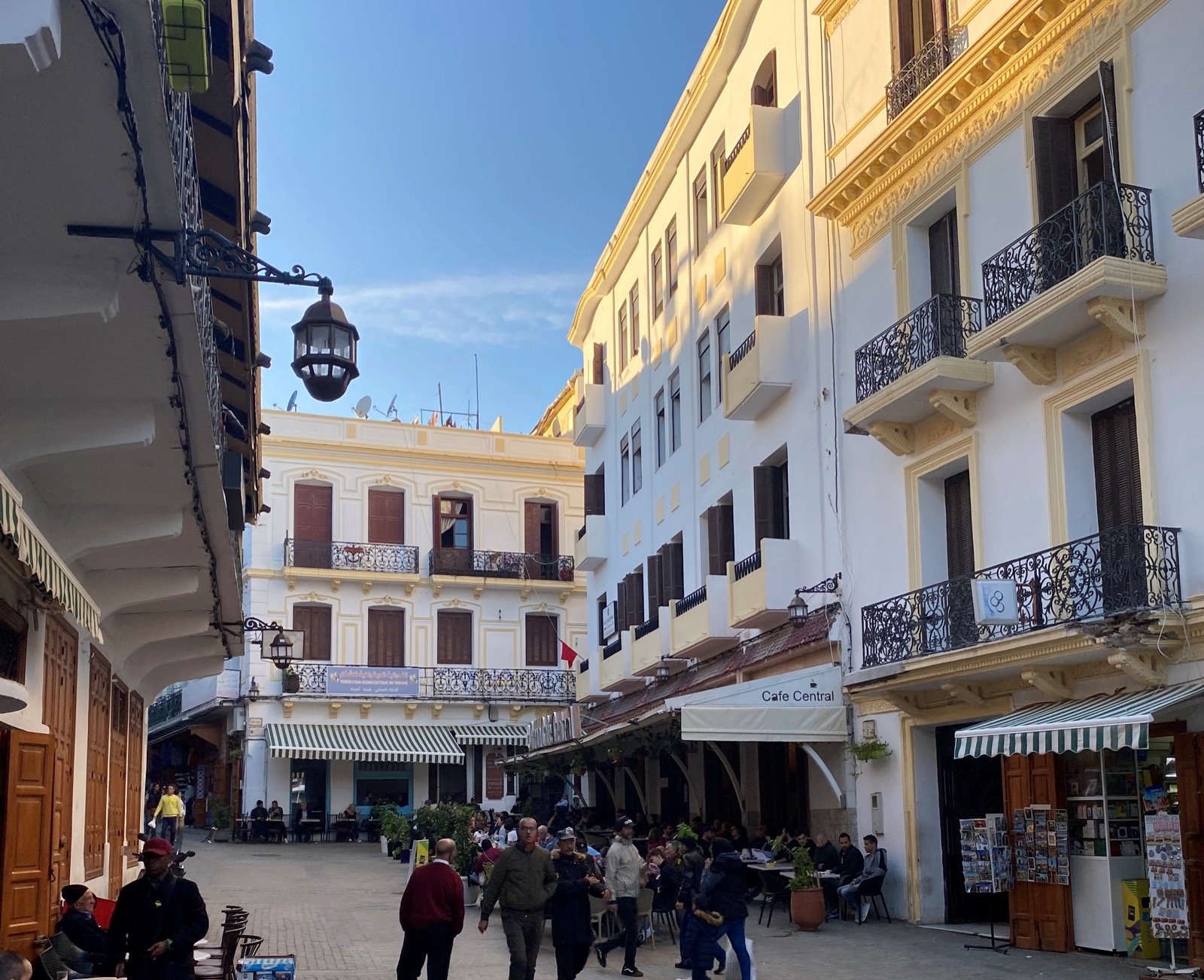
The modern centre: wide lit pavements, banks, hotels, the Terrasse des Paresseux looking out over the port, and café terraces that stay busy late. The easiest first-night base in the city, especially if you land after dark.
Residential clifftop neighbourhood west of the medina — families, bakeries, the Phoenician tombs and Café Hafa on the edge above the Strait. Calm, walkable, genuinely local. It goes quiet early, which is the point.
The rebuilt seafront east of the centre, along Avenue Mohammed VI: modern hotels, the beach, joggers, fish restaurants, families out until late. The most reassuring option for a first trip or for travelling with children.
Grand Socco to Petit Socco via Rue Siaghine, plus Rue de la Liberté. Busy, commercial and completely fine — the pressure here is sales pressure, not menace. It stays populated well into the evening.
Fine by day, take a taxi after dark
Step three turns off the main spine and the alleys narrow, unmark themselves and empty out around 22:00. Wonderful by daylight. After dark, come back down to a lit street and take a taxi rather than navigating by phone glow.
Plage Municipale is a proper city beach by day — swimmers, footballers, families. At night the sand is unlit and empty. Walk the promenade above it instead, where the restaurants and lights are.
Both are safe, both are magnets for taxi touts and self-appointed “helpers”. Nothing sinister — just arrive knowing where you’re going, and walk clear of the terminal doors before you talk to anyone.
The city’s giant cheap market south of the centre. Fascinating by day if you like a real souk, and the single best pickpocket ground in Tangier. Front pockets only, no phone in hand, and nothing to do there at night.
The dense working neighbourhood on the road climbing from the medina towards the Old Mountain. Perfectly ordinary to pass through in daylight; not a place to wander on foot late in the evening.
Better skipped unless you know the city
Tangier’s largest working-class district, well south of everything a visitor comes for. It is a normal neighbourhood, not a no-go zone — but there is nothing there for you, no reason to arrive, and you would draw attention simply by existing in it.
Outer residential districts on the ring road. Same logic exactly: far from the sights, built for commuting and living rather than visiting, and awkward to leave late at night.
Cap Malabata’s far end, and the western beaches out towards Achakar and Cap Spartel, have long unlit stretches with no passers-by. Go in daylight, ideally with company, and arrange your ride back before you set off.
The scams to know
None of these are unique to Tangier — they run in every Moroccan tourist city, and we catalogue the national set in common tourist scams in Morocco. But these are the ones you will actually meet here, in these exact spots. Learn the shape of them once and they stop working on you entirely. Two phrases carry most of the weight: la, shukran (no, thank you) and safi (that’s enough) — said pleasantly, without stopping.
A friendly man tells you the way ahead is blocked, or that there’s a Berber market on today only. There isn’t. Say “thanks, I’m meeting someone” and keep walking in the direction you were already going.
Someone attaches himself at the Grand Socco, a medina gate or the port exit, narrates for ten minutes, then presents a bill. Licensed guides carry a Ministry of Tourism badge and are booked through your riad. Say “no thank you, I already have a guide.”
A petit taxi driver announces the meter isn’t working and names a number instead. Ask once: “compteur, s’il vous plaît.” If it’s still broken, step out and take the next one — there are hundreds.
At the Grand Socco or Petit Socco, a woman takes your hand and begins drawing before you have agreed to anything, then asks for payment for a design you can’t undo. Hands in pockets, “la, shukran”, walk on.
A stranger talks you through the screens and then wants a tip — or simply watches your PIN. Use a machine inside a bank lobby during opening hours, cover the keypad, and decline all assistance. More on this in our Morocco money guide.
A bracelet slipped onto your wrist, a sprig of mint, a monkey or a snake placed on your shoulder for a photo. Once it’s in your hand it costs money. Don’t accept anything into your hands on the street.
An invitation to a cousin’s shop “just to look, no obligation”. If you enjoy shopping, go and enjoy it — the tea is real hospitality. If you don’t, know that you are never obliged to buy, and you can leave at any point without apology.
Arriving from Tarifa into Tangier’s city port, people offer taxis, hotels and day trips before you have cleared the building. Walk out of the terminal gate first, then choose a taxi from the official rank.
Getting around safely
Tangier’s petits taxis are blue, take up to three passengers, run on a meter and cannot leave the city limits. Insist on the meter and the whole problem disappears. If the driver stops to pick up another passenger heading your way, that is completely normal shared practice here, not a scam — you each pay your own leg.
Grands taxis are the older sedans that run fixed routes out of town: Asilah, Tétouan, Chefchaouen, Cap Spartel. They fill with six passengers and leave when full, or you can pay for the empty seats and go alone. There is no meter, so agree the fare before you get in.
- From the airport. Ibn Battouta is roughly 15 km southwest of the centre. Official fares are posted at the rank; agree yours before loading bags. For a late arrival, ask your hotel to send a driver — it costs a little more and removes the entire negotiation.
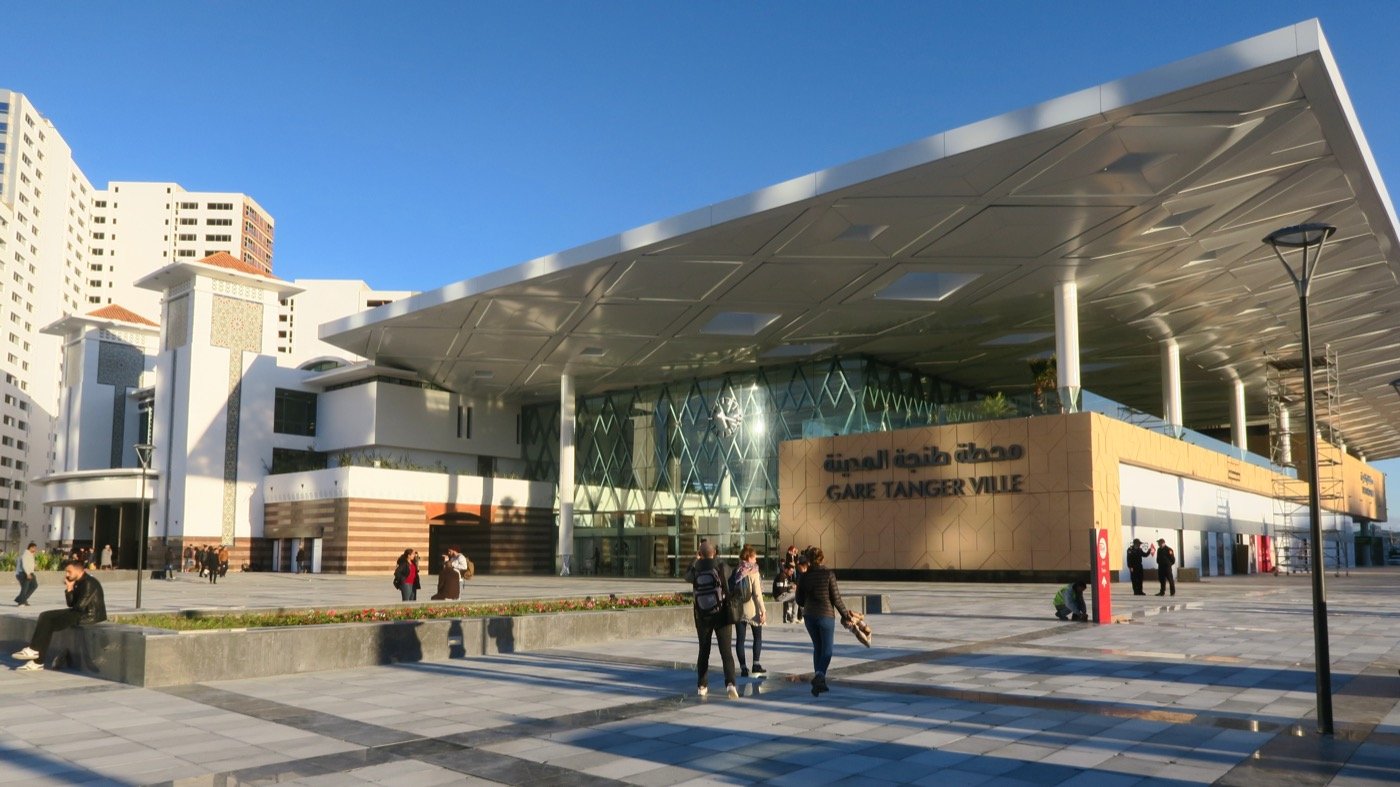
- From the train station. Tanger Ville sits east of the centre near Malabata, and it’s the northern terminus of the Al Boraq high-speed line to Rabat and Casablanca. There’s a proper taxi rank outside. We explain the whole network in our guide to trains in Morocco.
- From Tanger Med. Ferries from Algeciras dock about 40 km east of the city, not in Tangier itself. Plan the onward shuttle or grand taxi before you sail; don’t assume you can walk to anything.
- City buses exist and are cheap, but stops are not labelled with visitors in mind. Fine once you know the city, frustrating on day one.
- There is no tram in Tangier — that’s Casablanca and Rabat. Don’t plan around one.
- Don’t rely on ride-hailing apps. Coverage in Tangier is patchy at best, and Uber does not operate in Morocco. Your riad’s WhatsApp is the dependable “app” here.
- On foot, the medina and the Ville Nouvelle are both very walkable and the hills are steeper than they look. Crossing roads is a negotiation, not a right of way — cross alongside locals and move at a steady, predictable pace.
Tangier at night
Tangier is an evening city. Boulevard Pasteur, Rue de la Liberté and Place de France stay bright and full of café terraces well past midnight; the corniche restaurants at Malabata run late; the Grand Socco around Cinéma Rif keeps a good hum; and the marina end of the port is lit and patrolled. In these areas, walking after dinner is completely normal and you’ll be surrounded by families doing exactly the same thing.
What changes after dark is geography, not danger. The medina’s main lanes stay populated but its back alleys empty out and lose their lighting. The beach sand empties completely. Many traditional cafés tilt heavily male in the late evening, which is a comfort issue rather than a safety one — the newer places on the corniche and in the Ville Nouvelle stay mixed. Taxi meters switch to the legal higher night tariff, which is not a driver inventing a price.
Getting home well is mostly about preparation. Pin your accommodation before you go out and save it offline, keep a photo of the address written in French or Arabic to show a driver, and take taxis from a lit main street rather than a side lane. Ask the restaurant to call one — they do it constantly and it takes two minutes. If you’re heading up into the Kasbah late, get dropped at the nearest gate rather than walking the climb alone. Alcohol is served in hotels, licensed restaurants and a handful of bars, but visible drunkenness stands out sharply here and attracts exactly the attention you don’t want.
Solo travellers, and solo women
Solo travel in Tangier works, and plenty of women do it every week. The honest version: you will get attention. Comments in the street, “where are you from”, a shopkeeper who won’t take a first no, occasionally someone walking beside you for a block. It is wearing. It is also almost entirely verbal — physical aggression towards visitors is genuinely rare here.
What works is boring and effective: don’t answer, don’t slow down, don’t smile it off. Sunglasses and a destination in your stride end most approaches before they start. If someone won’t leave, walk into a café, a pharmacy or a shop — staff will handle it for you without being asked twice.
- Book somewhere with a staffed entrance. A riad with 24-hour reception in the Kasbah or a hotel on Boulevard Pasteur means there is always someone who knows you came home.
- Send the taxi’s plate to a friend before you pull away, and share your live location for the ride. It takes four seconds and it changes how the ride feels.
- Use a Check-on-Me timer before a solo walk up to Café Hafa or along the corniche — set it, and if you don’t check in, the people you chose get told where you were.
- Dress is relaxed here by Moroccan standards — Tangier is a coastal port city and you’ll see everything. Shoulders and knees covered in the medina still buys you a noticeably quieter day.
- “I’m meeting my husband” ends a conversation faster than any polite refusal, whether or not it’s true. Use whatever works.
- Trust the flinch. If a street reads wrong, turn around. You never owe anyone the walk.
We go much deeper on this in our guide to solo female travel in Morocco, including how the attention differs between cities and what to do when a no isn’t landing.
Things not to do
- Don’t buy or carry kif or hashish. The Rif is not far and the offers will come. It is illegal, and the offer itself is sometimes the setup.
- Don’t photograph people, police, or port and military installations without asking. Ask first and you’ll usually get a yes and a conversation.
- Don’t take a “shortcut” through the medina with someone you met five minutes ago, however charming.
- Don’t count cash on the street or pull out a fat wallet in a market. Carry the day’s money in a front pocket and leave the rest in the safe.
- Don’t get into an unmarked car offering a lift. No colour, no meter, no.
- Don’t walk the beach sand alone after dark. The promenade above it is fine; the sand is not the place.
- Don’t argue in public with a driver or a seller. Walk away and take the small loss — a scene never resolves in a visitor’s favour.
- Don’t leave your phone face-up on a terrace table beside the pavement, especially on the busy Ville Nouvelle boulevards.
- Don’t rely on finding Wi-Fi when you need a map or a phone call. That is the one failure that turns a small problem into a stressful one.
Emergency numbers, and what to do
Save these before you fly, not when you need them. Morocco uses short two- and three-digit numbers, and the one you dial depends on where you are standing.
Inside Tangier you want 19. The moment you leave the city limits — the road to Cap Spartel, the run out to Tanger Med, the mountain road towards Chefchaouen — it becomes 177, because the Gendarmerie Royale covers everything outside urban areas. 15 reaches the ambulance service. Operators may answer in Arabic or French, so have your location ready to read out or show: a street name and a landmark beats a set of coordinates you can’t pronounce. Our full breakdown, including the tourist police, sits in emergency numbers in Morocco every tourist should know.
For medical care, Tangier’s main public hospital is Hôpital Mohammed V, and there is a cluster of private clinics in and around the Ville Nouvelle that are usually quicker for non-urgent problems — a stomach bug, a sprain, stitches. Private clinics expect payment or an insurance guarantee up front, so know how you would pay before you need to. Travel insurance is not something we provide; buy it separately, and buy it before you fly. If you’re continuing south afterwards, we’ve mapped the equivalent for the best hospitals in Marrakech for tourists.
The free Stay Safe Morocco app exists for exactly this ten seconds. One tap on SOS dials the right local number for where you are, logs your GPS, and notifies the Safety Circle you chose — the people who should know. It also carries a directory of 172 hospitals across 31 cities, Check-on-Me timers, and offline-ready essentials for when the signal drops in a medina stairwell. It doesn’t send anyone to you and it isn’t watching you; it dials, it locates, it tells your people. On a bad afternoon, that is exactly enough.
The bottom line
Tangier is safe, and it is one of the most rewarding cities in Morocco precisely because so many people still believe an outdated story about it. Stay in the Kasbah, the Ville Nouvelle, Marshan or along the corniche. Insist on the meter. Keep walking when someone tells you the medina is closed. Skip the outer districts, not because they’re frightening but because there’s nothing there for you. That’s the entire security briefing.
What’s left after that is the actual city: mint tea on a cliff terrace with two continents in view, the fish market at midday, the sound of the ferry horn cutting across the Grand Socco. Do two things before you go — save 19, 15 and 177 into your phone, and sort your connectivity so you land already online. Then go and enjoy it, which was always the point.
Frequently asked questions
Is Tangier safe for tourists in 2026? Yes. Tangier is a safe city for visitors, with a visible police presence in tourist areas and rare violent crime against tourists. The realistic issues are pickpocketing in crowded markets, unlicensed guides, and taxi drivers who avoid the meter — all avoidable with normal city awareness.
Is Tangier safe at night? Yes, in the right areas. Boulevard Pasteur, Place de France, the Grand Socco and the Malabata corniche stay busy and well lit late into the evening. The medina’s back alleys and the beach sand empty out and go dark after about 22:00, so take a taxi from a lit main street instead of walking through them.
Which neighbourhood should I stay in in Tangier? The Kasbah for atmosphere and quiet lanes, the Ville Nouvelle around Boulevard Pasteur for convenience and late-night cafés, Malabata or the corniche for modern hotels and the beach, and Marshan for a calm residential base near Café Hafa. All four are comfortable day and night.
Which areas of Tangier should I avoid? Visitors have no reason to go to the outer residential districts such as Beni Makada, Mesnana, Branes or Bir Chifa — they are ordinary neighbourhoods, simply not visitor areas. Also avoid the Casabarata market after dark, the unlit beach sand at night, and empty stretches of coast towards Cap Malabata or Achakar when alone.
Is Tangier safe for solo female travellers? Yes, and many women visit alone. Expect verbal attention — comments and persistent approaches — rather than physical threat. Not answering, not slowing down, staying in busy lit areas at night, booking accommodation with 24-hour reception and sharing your live location handle almost all of it.
How do I avoid being overcharged by a taxi in Tangier? Petits taxis in Tangier are blue and must use the meter, so ask for the compteur and step out and take another taxi if the driver refuses. Grands taxis for trips outside the city have no meter, so agree the fare before you get in. A higher night tariff on the meter after dark is legal and normal.
What emergency number do I call in Tangier? Dial 19 for police inside the city, 15 for an ambulance, and 177 for the Gendarmerie Royale once you are outside the city limits. Save all three before you arrive. Tangier’s main public hospital is Hôpital Mohammed V, with private clinics in the Ville Nouvelle for non-urgent care.
We are the team behind Stay Safe Morocco, the free iOS safety app for visitors to Morocco. We built the one-tap SOS that dials Morocco’s real emergency numbers, the directory of 172 hospitals across 31 cities, and the Safety Circle that receives your location the moment you press SOS. We live and work here, and we keep this guide current.
🛡 Land in Morocco already connected — and safe
Every StaySafe Morocco eSIM comes with free Family SOS: one tap to reach emergency help and share your live location with your family. No data cap, keep your number, from $20.79.
Get your eSIM + Family SOS →Explore Morocco — city guides
- Agadir
- Best Places to Visit in Morocco: A First-Timer’s Shortlist
- Best Things to Do in Marrakech: The Essential Guide
- Casablanca
- Chefchaouen
- El Jadida
- Essaouira Culture Guide: Gnaoua Music, Art & Local Life
- Essaouira
- Fes
- Marrakech in Summer: Pools, Heat & How to Stay Cool
- Marrakech
- Meknes
- Nador
- Ouarzazate
- Oujda
- Places to Visit in Marrakech: A First-Timer’s Day-by-Day Map
- Rabat
- Safi
- Tangier
- Tétouan