Short answer: in Morocco’s cities, the tap water is treated, chlorinated and piped by the national utility (ONEE) — it is fine for brushing your teeth, rinsing fruit, cooking and showering, and plenty of Moroccans drink it straight from the tap. Most visitors still drink bottled water, and that’s a reasonable habit rather than a warning: the mineral content differs from what your body is used to, older buildings can have tired plumbing, and a 1.5-litre bottle costs about 6–8 dirhams in a shop. The two facts sit together comfortably.
The bigger question — the one that actually decides whether you spend a day in your riad instead of the medina — is not the tap. It’s ice in a rural café, a glass of juice rinsed in a bucket, and knowing which food stall to walk toward. Morocco has some of the best street food on the Mediterranean rim, and you should eat it. Here’s how to eat it well, what to carry in your bag, and exactly what to do on the rare occasion your stomach disagrees.
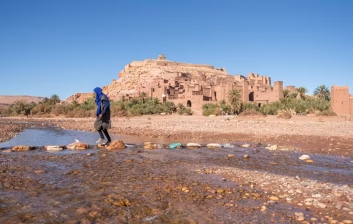
Tap water, bottled water, and the honest middle ground
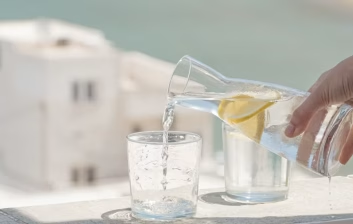
Urban Morocco — Casablanca, Rabat, Marrakech, Fes, Tangier, Agadir — runs on treated municipal water that is chlorinated to a standard you can taste. That taste is the main reason travellers switch to bottled, not safety. Use the tap freely for teeth, showers, washing produce and boiling; if you’d rather not drink it, the shops make that easy.
Common still brands are Sidi Ali, Sidi Harazem and Aïn Saïss; Oulmès is the sparkling one. Buy from a grocery or hanout rather than a restaurant terrace and you’ll pay a fraction of the price. Look for an intact seal on the cap — the same thing you’d check anywhere. In small mountain villages and desert settlements, the supply is often untreated spring or well water, so that’s where bottled or purified genuinely becomes the default rather than the preference.
Ice, juice and salad: the three things worth a second's thought
These are the situations travellers actually ask about, and none of them needs to be avoided — they just reward a moment of attention.
In hotels, riads and established restaurants, ice is made commercially or from treated water and is fine. At a roadside café in a small town, it’s a coin flip on what it was frozen from — order your drink cold from the fridge instead.
One of Morocco’s great pleasures, and the fruit is never the issue — the reused glass rinsed in a bucket of standing water is. Ask for a plastic cup (“gobelet”), which every stall in Jemaa el-Fnaa has, and drink it there and then.
Shredded carrot, tomato and cucumber salads in city restaurants are washed in the same treated water you’d shower in, and they’re fine. In remote guesthouses, lean toward the cooked dishes — of which there are many.
Fresh lben (buttermilk) and raib from a market stall may be unpasteurised. Branded cartons are pasteurised and sold everywhere. If you have a sensitive stomach, take the carton.
Street food: pick the stall the locals are queuing at
The single best rule in Morocco is turnover. A stall with a crowd of Moroccan families around it is cooking through its ingredients in an hour; a quiet one with a pretty English menu may be reheating. Watch for food that is grilled, fried or ladled from a bubbling pot in front of you and handed over hot — that’s the whole test, and it passes almost everywhere in Jemaa el-Fnaa’s numbered stalls after dark.
Things that are nearly always a good bet: harira soup poured from a simmering cauldron, brochettes off the charcoal, grilled sardines on the Essaouira port quay, msemen and beghrir cooked to order at a breakfast griddle, and any tagine or couscous that has spent hours over heat. Mint tea is made with boiled water, so it’s safe by construction — and it’s how half of Morocco’s conversations start.
What to pack (it's a very short list)
- Oral rehydration salts. The one genuinely useful item. Ask a pharmacy for “sels de réhydratation orale” or SRO — a few dirhams a sachet, no prescription.
- A reusable bottle. Refill from treated taps in cities; it saves a startling amount of plastic over two weeks.
- Purification tablets or a filter bottle if you’re trekking in the Atlas, camping in the Sahara or staying in village gîtes.
- Hand gel. Sinks are common, soap at a street stall less so.
- Any prescription medication in its original box, with the generic name written down — pharmacists here work in French and Arabic, and the molecule name travels better than the brand.
If your stomach does turn: the 48-hour plan
Most travellers’ upsets in Morocco are mild, self-limiting and over in one to three days. Rest, drink steadily, and use rehydration salts rather than plain water — you’re replacing salts, not just fluid. Eat when you’re hungry and keep it plain: bread, rice, bananas, plain couscous, broth. Skip the alcohol and go easy on coffee for a day.
Moroccan pharmacies are excellent, everywhere, and marked by a green cross. Pharmacists are highly trained, dispense a lot without a prescription, and are usually the fastest first stop for advice. Outside normal hours, each town runs a duty rota — the pharmacie de garde — and the current one is posted in most pharmacy windows and listed in the local press; your riad’s front desk will know the nearest.
When it's more than a bad day
Call for help — early, and without hesitating — if you see a fever above 38.5°C, blood in your stool, severe or one-sided abdominal pain, vomiting that won’t stop, or clear signs of dehydration (no urination for many hours, dizziness on standing, confusion). Those are the thresholds where a doctor, not a pharmacy, is the right call. In Marrakech, our guide to the best hospitals for tourists lists the clinics used to treating international visitors.
112 works from any phone, with no SIM and no credit — worth committing to memory before you need it. The full list, including what to say and in which language, is in our guide to emergency numbers in Morocco.
In the desert and the mountains, water is the whole plan
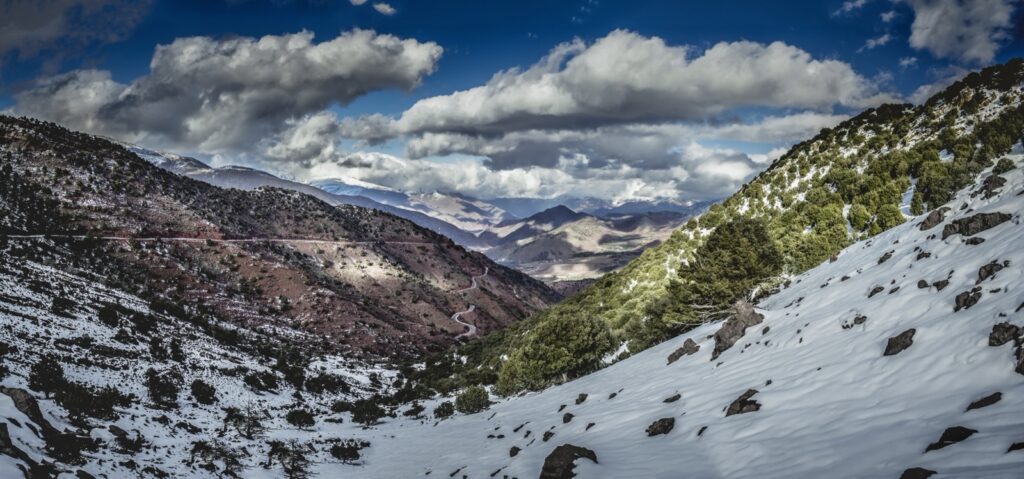
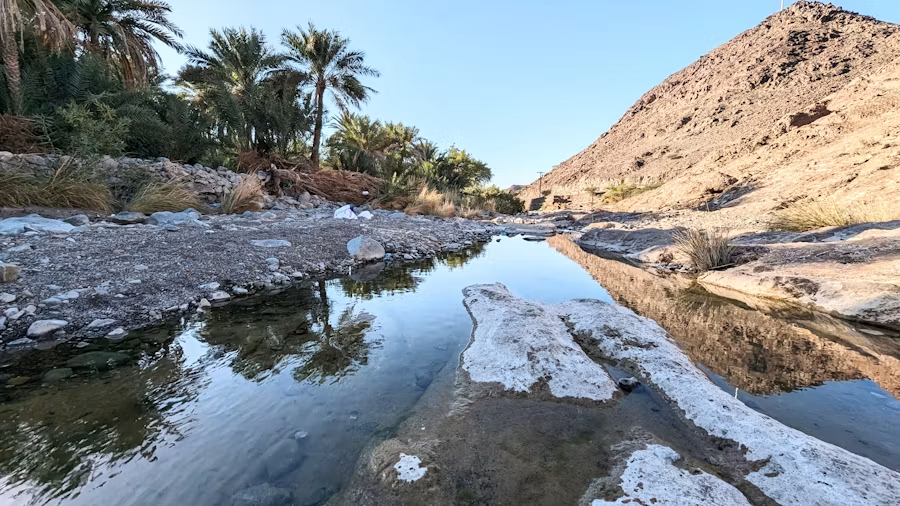
Away from the cities the calculation changes, and mostly in a good way: you simply plan ahead. Carry more water than you think you need on a High Atlas day walk or a Merzouga dune trip — three to four litres per person in summer is not excessive when afternoon temperatures run past 40°C. Treat village or spring water with tablets or a filter before drinking. Drink before you’re thirsty; thirst arrives late in dry heat. The same discipline applies in town during July and August, which is why our Marrakech summer guide is really a hydration guide with a pool in it.
This is also where connectivity stops being a convenience. A local data plan means you can look up a clinic, call a guesthouse or send your coordinates from a piste with no Wi-Fi in sight — a Morocco eSIM installs before you fly and activates on landing, with 10 GB, 15 GB and 20 GB packs from $9. And one-tap SOS in the Stay Safe Morocco app logs your exact location and dials the correct local emergency number for where you’re standing, with the number list and your embassy details stored offline so they’re there whether or not you have signal.
The bottom line
Morocco is not a country you eat and drink defensively in. City tap water is treated and fine for daily use, bottled water is cheap and everywhere, pharmacies are on nearly every corner, and the food — the grilled, the ladled, the slow-cooked — is one of the strongest reasons to come. Carry rehydration salts, choose the busy stall, ask for a plastic cup with your orange juice, and save the emergency numbers before you land. Then go and eat the snail soup. For the wider picture on travelling here with confidence, start with our complete Morocco safety guide.
Frequently asked questions
Can you drink tap water in Morocco? In cities and large towns, yes — the municipal supply is treated and chlorinated, and many Moroccans drink it. It is safe for brushing teeth, cooking and washing produce anywhere with a treated supply. Most visitors prefer bottled water for taste and habit, and in remote villages, mountain gîtes and desert camps, bottled or purified water is the sensible default.
Is ice safe in Morocco? In hotels, riads and established restaurants, yes — it is made from treated or commercial water. In small rural cafés you can’t tell what it was frozen from, so order a bottled or chilled drink instead of an iced one.
Is street food in Marrakech safe to eat? Generally yes, and it’s one of the best things about the city. Choose stalls with a queue of locals and fast turnover, and eat food that’s grilled, fried or ladled hot in front of you. The numbered stalls in Jemaa el-Fnaa cook to order all evening.
What should I take for an upset stomach in Morocco? Oral rehydration salts are the single most useful thing — ask any pharmacy for “SRO”. Rest, sip steadily and eat plain food. Moroccan pharmacists are well trained, dispense a lot without a prescription and are the quickest first stop for advice.
What number do I call for an ambulance or doctor in Morocco? Dial 15 for ambulance and civil protection, or 112, the universal emergency number, which works from any phone with no SIM card and no credit. Use 19 for police in cities and 177 for the gendarmerie on rural roads.
🛡 Land in Morocco already connected — and safe
Every StaySafe Morocco eSIM comes with free Family SOS: one tap to reach emergency help and share your live location with your family. No data cap, keep your number, from $20.79.
Get your eSIM + Family SOS →Before you go — related guides
- Is Morocco safe for tourists?
- Emergency numbers in Morocco
- Common scams in Morocco & how to avoid them
- How to get internet & mobile data in Morocco
- How to get a SIM / eSIM in Morocco
- Best eSIM for Morocco: plans & prices
- Buy a Morocco eSIM — no data cap, your dates
- Morocco eSIM setup: device check & activation
- What is an eSIM and how does it work?
Explore Morocco — city guides
- Agadir
- Best Places to Visit in Morocco: A First-Timer’s Shortlist
- Best Things to Do in Marrakech: The Essential Guide
- Casablanca
- Chefchaouen
- El Jadida
- Essaouira Culture Guide: Gnaoua Music, Art & Local Life
- Essaouira
- Fes
- Marrakech in Summer: Pools, Heat & How to Stay Cool
- Marrakech
- Meknes
- Nador
- Ouarzazate
- Oujda
- Places to Visit in Marrakech: A First-Timer’s Day-by-Day Map
- Rabat
- Safi
- Tangier
- Tétouan