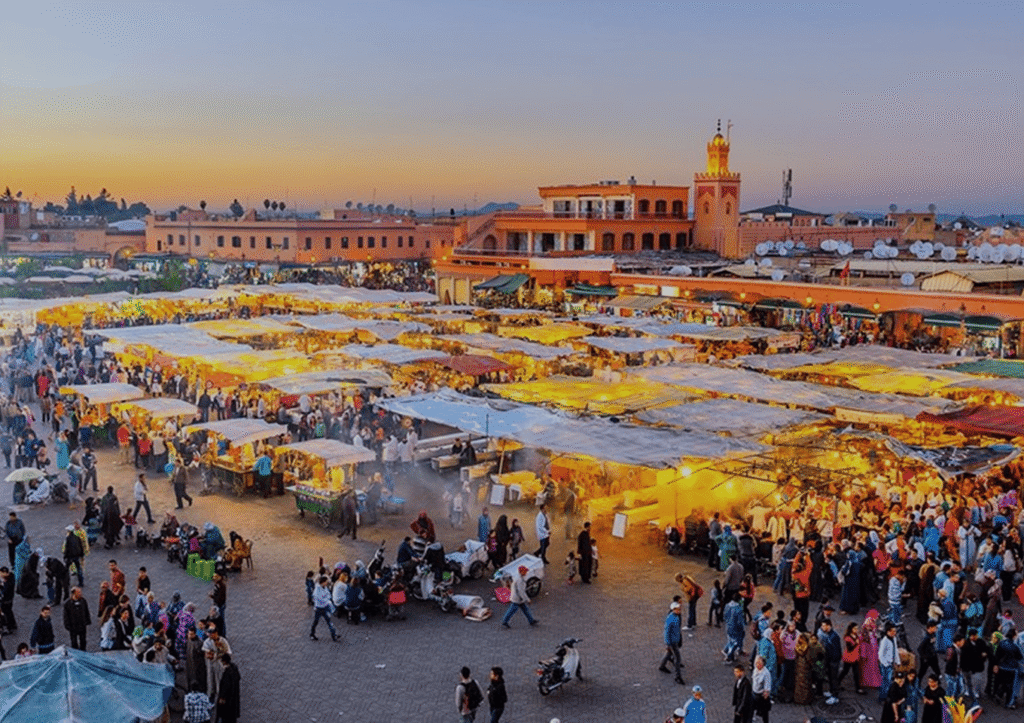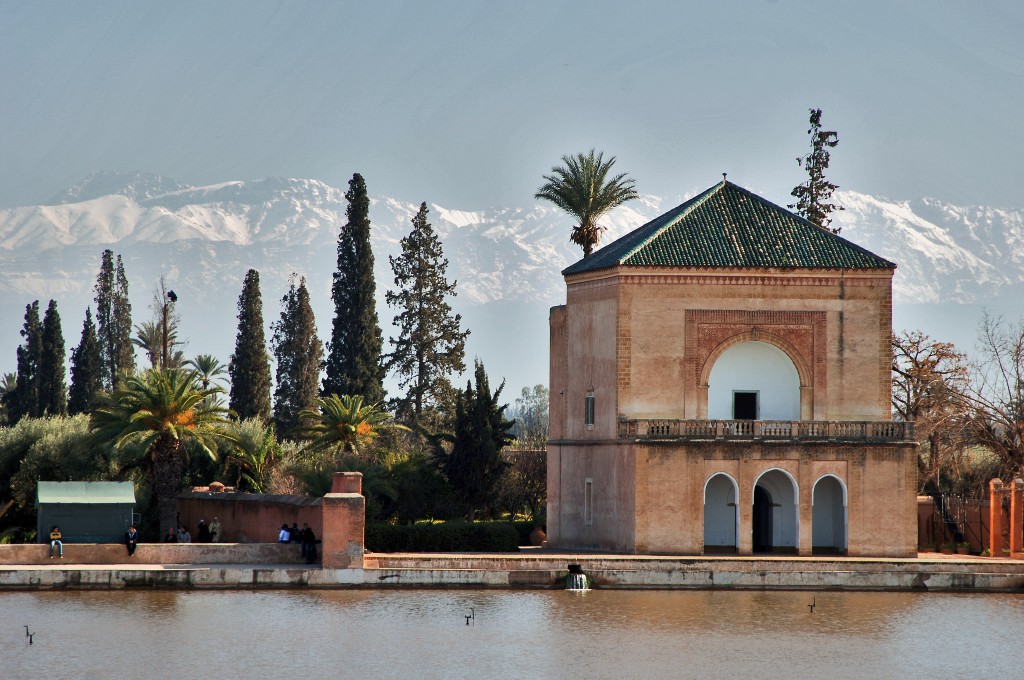
Yes — Nador is safe for visitors, in the ordinary way that a working Mediterranean port city is safe. It is not a tourist town, and that is the whole character of the place: there is no scam industry here because there has never been a queue of tourists to run one on. What you get instead is a real northern Moroccan city on the edge of a huge lagoon, where people are curious about you rather than commercially interested in you.
That said, “safe” is not the same as “nothing to know”. Nador has its own rhythms — a border town’s habits, a shared-taxi culture, a promenade that fills at dusk and empties fast, and a few areas that make sense by day and none at all after dark. This guide gives you the verdict first, then the specifics: named neighbourhoods in three tiers, the scams that actually turn up, how the taxis work, what changes at night, what solo travellers and solo women really experience, and the numbers to save before you land. If you want the national picture first, start with our guide de sécurité au Maroc; if you want the attractions rather than the caution, our Nador city guide covers things to see.
La réponse courte
Nador is a safe, unflashy port city where violent crime against visitors is rare, the real risks are petty theft in crowds and traffic, and the sensible line is city sense after dark rather than caution all day. Stay near the Corniche or the centre, use taxis at night, and you will have an easy trip.
Nador sits on the Marchica lagoon in Morocco’s Oriental region, a short drive from the Spanish enclave of Melilla and about twenty-five kilometres from Nador El Aroui airport. Its economy is trade, fishing, agriculture and — enormously — the Riffian diaspora in Belgium, the Netherlands, Germany, Spain and France. That last point matters more than any statistic for how your trip will feel. Half the people you meet have a cousin in Antwerp or Almería. You will hear Tarifit first, Darija second, and then Spanish, Dutch, French and German scattered through the same café terrace. Nador is used to outsiders. It is just not used to being visited.
The practical consequence is that the hassle levels you may have read about in Marrakech or Fes are genuinely lower here. Nobody is going to walk you to a tannery. What replaces it is a quieter set of things: a taxi meter that stays switched off, a stranger at the border who wants to “help”, an unlit stretch of lagoon path that looked fine on the map. None of that is dangerous. All of it is avoidable once you know the shape of the city.
One honest caveat about seasons. In July and August, Nador fills with returning diaspora families arriving by ferry through Beni Ensar. The city is joyful, loud and completely booked out; traffic is heavy and the roads are the single biggest risk of your trip. Outside those two months the town is calm, cheap and easy, and hotels have space.
Staying connected in Nador
A working phone is not a luxury here — it is the safety tool. It is how you check a taxi route mid-journey, how you show a driver an address in Arabic script, how you find your hotel when a street has three spellings, and how you dial 19 if you ever need to. Nador has solid 4G and 5G coverage in the city and along the coast road; it thins out on the Gourougou slopes and in the countryside towards Driouch.
Sort connectivity before you fly rather than hunting for a shop on arrival. Our eSIM Maroc is a single, day-based plan: you choose your trip length and how many travellers, and it arrives as a QR code by email with unlimited data, two hours of calls and 24/7 support. You scan it at home and it works the moment you land — no queue at the airport, no passport photocopy, no shop closed for Friday prayers. New to the technology? Here is what an eSIM actually is. And if you would rather understand coverage gaps first, read ce qui fonctionne encore sur votre téléphone sans réseau.
Where to stay, and where to be careful
This is the section most guides refuse to write. Nador is small enough that where you sleep decides most of your experience, so here are the actual districts, sorted by how they feel at different hours. None of these are no-go zones in the dramatic sense — Nador does not have those. They are simply areas that reward different levels of familiarity.
The lagoon-facing promenade is the heart of the city’s evening life: families walking, cafés full until late, good lighting and constant footfall. If you book one place in Nador, book here.
Banks, pharmacies, the better hotels, patisseries and a visible police presence. Walkable, well lit, and a five-minute taxi from anywhere else you will need.
The peninsula development across the lagoon is calm, green and entirely safe. The trade-off is isolation: there is no street life, so you will be taxi-dependent after dark rather than strolling anywhere.
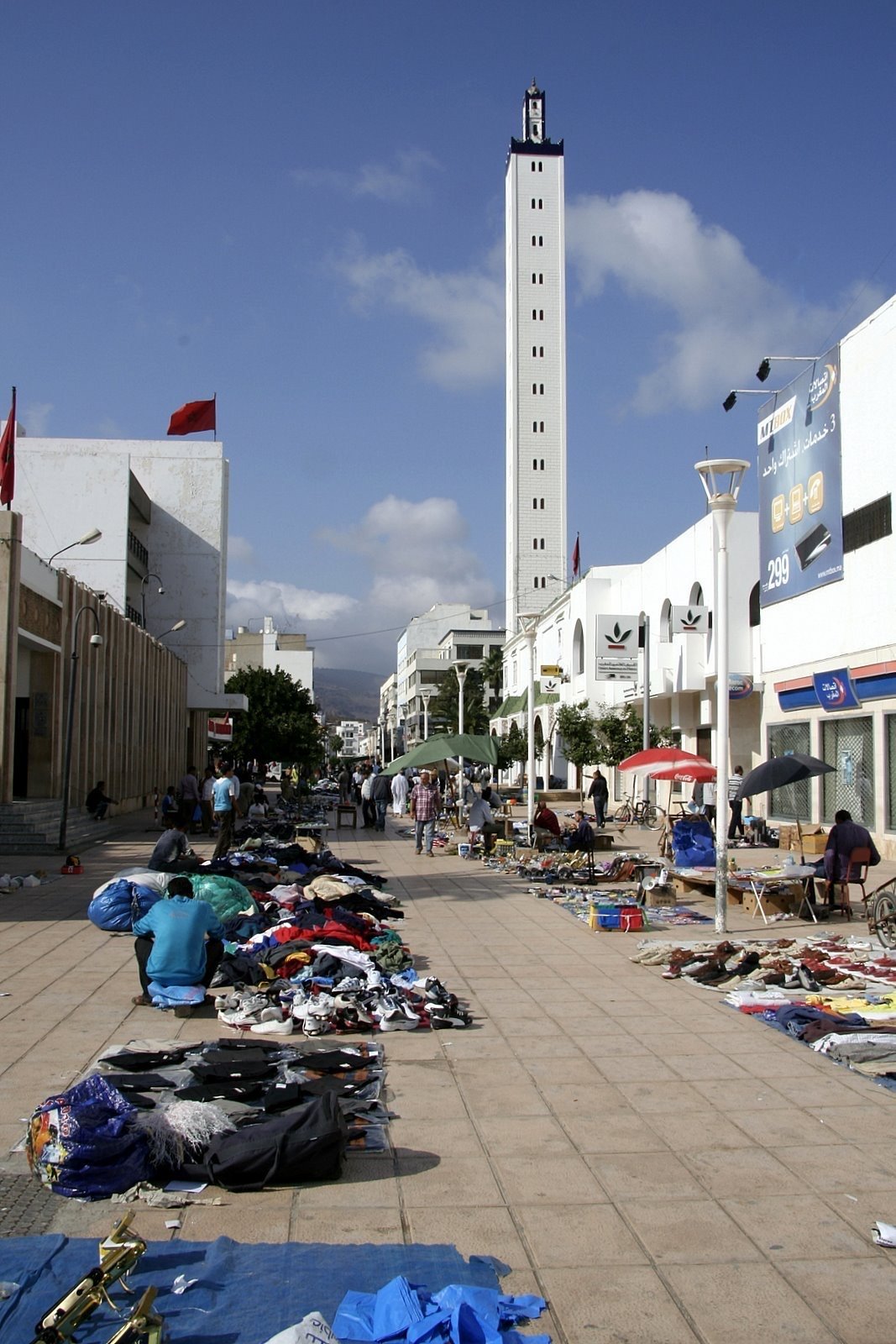
Dense, cheerful and worth an hour in the morning for olives, dates and spices. Keep your phone in a front pocket in the crush. By ten at night the shutters are down and the streets are empty; take a taxi rather than walking through.
Functional, busy and completely normal in daylight if you are catching a ferry to Almería or Motril. After dark it is a working port with very little reason for a visitor to linger. Arrive, do your business, leave.
Large ordinary neighbourhoods where Nadoris live. Nothing at all against them; they are simply far from anything you came for, poorly lit, and confusing on foot at night. Visitors rarely have a reason to be there after dinner.
Industrial and agricultural, on the way to El Aroui airport. Perfectly safe in daylight, but this is open road outside the city limits: if something happens here, the number is 177 for the Gendarmerie, not 19.
Beautiful, and genuinely the best reason to come. All three are busy and family-filled in daylight and completely deserted after sunset. Do not plan to be at any of them once the light goes.
The wooded mountain above the city is not a casual hiking spot. There is an ongoing migration and policing situation on those slopes and no visitor infrastructure. Enjoy the view of Gourougou from the Corniche instead.
Past the lit stretch of the Corniche, the path runs into scrubland and half-finished development. It is empty rather than menacing, but empty is exactly where an opportunist phone-snatch happens. Turn back where the lights stop.
The contraband trade around the crossing has its own economy and its own arguments. It is not aimed at tourists and it is not a scene to wander into out of curiosity.
Two general rules cover everything above. First, Nador’s risk is almost entirely opportunistic: a phone lifted in a market crush, a bag taken from the back of a moped-passing café chair. Carry a day’s cash, not your card wallet, and keep the phone out of your back pocket. Second, the city has a hard on/off switch at around eleven at night. What is lively and safe at nine is deserted at midnight — not because it turned dangerous, but because everyone went home.
The scams to know
Nador’s list is short and mostly gentle by Moroccan standards — our national guide to tourist scams covers the medina classics, and honestly, most of them do not exist here. These are the ones you will actually meet, with the line that ends them.
The most common one by far, in petits taxis. It is almost never broken. Say “Le compteur, s’il vous plaît” as you get in, before the doors close. If the driver refuses, get out and take the next one — there is always a next one.
Shared grands taxis run fixed routes with six passengers. A driver may tell a foreigner they must buy all six places. You do not have to. Say “Une place seulement” — one seat only — and wait for the car to fill like everyone else, or genuinely choose to buy the extra seats for comfort.
Someone will offer to walk you through the formalities faster. Nobody can. Never hand your passport to a stranger, never pay to skip a queue, and deal only with uniformed officials at their windows. A polite “Non merci, ça va” and continued walking works every time.
Near the border you will be offered an excellent rate for euros. It is illegal, the count is short, and the notes are not always real. Use a bank, a licensed bureau de change or an ATM inside a bank branch — see our Morocco money guide.
If someone appears at your shoulder offering to help with a machine “that is difficult”, cancel the transaction and walk into the bank. Cover the keypad as a habit. Withdraw during opening hours from a machine attached to a branch.
Rarer in Nador than anywhere else in Morocco, but it happens along the Corniche and near the market: a friendly walk turns into a demand for payment. The fix is to decide at the first sentence. “Merci, je me promène seul” — I’m just walking — said warmly and without slowing down.
Electronics and branded goods pitched as duty-free Melilla stock. Some are counterfeit, some are stolen, and carrying undeclared goods across a border is your problem, not the seller’s. Buy from shops with a till and a receipt.
Getting around safely
Nador is compact — you can cross the useful part of it on foot in twenty-five minutes — but the taxi system is the thing to understand, because it is also how you reach the airport, the port and the beaches.
- Petits taxis are the small city cabs. They work inside Nador only, they are metered, and the meter is the whole game. Ask for it before you move. They also pick up additional passengers going the same way, which is normal and not a problem.
- Les grands taxis are the older white saloons that run fixed intercity routes — Nador to Beni Ensar, Selouane, El Aroui and the airport, Berkane, Oujda, Al Hoceima. They leave when full. Fares per seat are standard and locals will tell you the number if you ask; agree it out loud before you sit down.
- Trains do reach Nador. ONCF runs a line from Nador Ville down to Taourirt, connecting into the Fes–Oujda–Casablanca network, including overnight services. It is comfortable, cheap and a far better idea than a long-distance road trip at night. More on the network in our guide des trains au Maroc.
- There is no tram and no metro. Only Casablanca and Rabat-Salé have trams in Morocco; do not go looking for one here.
- CTM and Supratours coaches serve Nador from Fes, Oujda, Al Hoceima and Tangier. They are the safest long-distance road option: assigned seats, luggage tickets, scheduled departures.
- Ride-hailing is effectively absent. Apps that work in Casablanca or Marrakech do not have meaningful coverage in Nador, and drivers who do take app bookings operate in a grey area with local taxi unions. Do not plan your night around one arriving. Save your hotel’s own taxi number instead — every hotel has one.
- Airport transfers. El Aroui is about twenty-five kilometres out, mostly serving diaspora routes from Belgium, the Netherlands, Germany, Spain and France. Ask your hotel the going rate the day before, then agree that figure with the driver before loading your bag. Better still, ask the hotel to send a car.
- Driving. Roads around Nador are decent, but the coast road towards Al Hoceima is winding, and unlit roads at night bring pedestrians, mopeds without lights and livestock. If you drive, drive in daylight.
Statistically, traffic is the real hazard of a Nador trip and everything else is a footnote. Cross at marked crossings, expect mopeds from unexpected directions, and treat the coast road at night as a thing to avoid rather than survive.
Nador at night
Evenings here are one of the city’s real pleasures, and they are also the moment the map changes most. Between roughly seven and eleven, the Corniche and the central boulevards are the best-lit, most populated places in the province — whole families out walking, ice cream queues, café terraces three rows deep, teenagers on the sea wall.
What changes after that is coverage, not character. Nador is not a nightlife city. It is a family city that goes to bed. Around eleven the terraces thin, by midnight most of the centre is shuttered, and the streets that were full an hour earlier are simply empty. Empty streets are not dangerous, but they remove the thing that keeps a city comfortable: other people. The bars that do stay open are overwhelmingly male, local and not aimed at visitors, and there is no real reason for a first-timer to seek them out.
The practical plan is boring and works. Eat and walk on the Corniche or the central boulevards, not on the dark lagoon paths beyond them. Keep your phone charged and your hotel’s location pinned before you go out. When you are ready to go home, take a taxi from a lit rank or the number your hotel gave you rather than walking twenty minutes back through a district you saw only in daylight. If you like to walk home, walk the main roads — longer, brighter, entirely fine.
If someone at home worries about you, this is exactly what a simple check-in plan is for: a message when you sit down to eat, a message when you are back. It removes the anxiety on both ends without turning your evening into an itinerary.
Solo travellers, and solo women
Solo travel in Nador is straightforward, and solo women travel here without incident all the time. But because so few foreign visitors come, you will be noticed — and it is more honest to describe that than to pretend it away.
What actually happens, for a woman travelling alone, is attention rather than threat: looking, a “bonjour”, a comment as you pass, occasionally someone walking alongside for half a street. It is verbal, it is public, and it almost always stops the moment you do not engage. Sunglasses, headphones, a steady pace and no reply resolve nearly all of it. Nador is also a more conservative city than Marrakech or Casablanca, and cafés in the older parts of town still skew male — but the Corniche patisseries, the newer terraces and anywhere with families are mixed, comfortable and where you will want to be anyway.
The things that genuinely help are small. Covering shoulders and knees is the local norm and noticeably reduces attention; no one expects a headscarf. Saying you are meeting someone, whether or not you are, closes conversations cleanly. Book a hotel on the Corniche or in the centre so that your walk home is a lit main road. Take taxis after dark, always, rather than deciding case by case. And be a little vaguer than you would be at home about where you are staying. Our full solo female travel guide for Morocco goes deeper on all of this.
One genuinely nice thing about Nador specifically: because of the diaspora, an enormous number of people here speak Spanish, Dutch, French or German fluently, and are entirely used to European habits. If you need help — directions, a taxi, an explanation — you are rarely more than one shopkeeper away from someone who can talk to you properly. English is less common than in the tourist cities, so a few words of French go a long way.
Things not to do
- Do not photograph the border, the port, police, or military and gendarmerie installations. This is the single fastest way to have a bad afternoon in Nador. It is taken seriously here in a way it is not in Marrakech.
- Do not carry anything across the border for anyone, however small the favour sounds, and do not accept a package to “hold”.
- Do not buy or carry cannabis. It is illegal in Morocco, penalties are real, and the polite offers you may get on the road are not a grey area.
- Do not change money on the street. Bank, bureau de change, or an ATM inside a branch.
- Do not walk the unlit lagoon paths, the beaches or the construction fringes after dark. Nothing is stalking you out there; there is just nobody around if you turn an ankle.
- Do not swim in the Bocana channel. The cut between the lagoon and the open sea moves a lot of water fast. Swim on the busy, watched stretches of beach.
- Do not leave a phone on a café table facing the street, and do not hang a bag on the back of a terrace chair.
- Do not drink the tap water — buy bottled, as everywhere in Morocco. Details in our food and water guide.
- Do not assume the Melilla border is a casual day trip. Rules and opening arrangements have changed repeatedly; check current status, and check what re-entering Morocco does to your visa before you cross.
Emergency numbers, and what to do
Save these three before you fly, as contacts, not as a screenshot. In an emergency you will not be scrolling through a photo library.
The distinction between 19 and 177 matters more in Nador province than in most places, because so much of what you will do sits outside the city limits. Inside Nador — the Corniche, the centre, Beni Ensar, Ihaddadene — you want 19. On the airport road, out at Arekmane or Ras El Ma, or anywhere on the coast road towards Al Hoceima, you want 177. Ambulance is 15 everywhere. Our Morocco emergency numbers guide has the full list, including how to describe a location to an operator when you do not know the street name.
For medical care, Hôpital El Hassani is the public provincial hospital and the main emergency destination in Nador itself; there are private clinics in the centre for less urgent problems, which usually want payment up front and a receipt for your insurer. For anything serious, patients from Nador are typically transferred to CHU Mohammed VI in Oujda, the regional university hospital, roughly two and a half hours away by road. It is worth knowing that before you need it. If you are travelling on to the south, we keep a comparable rundown of hospitals in Marrakech for tourists.
Le free Stay Safe Morocco app exists for precisely this gap. One tap on SOS dials the correct local emergency number for where you are standing, logs your GPS, and notifies your Safety Circle — the people you chose before the trip — so someone knows both that you called and where from. It also carries a directory of 172 hospitals across 31 cities, Check-on-Me timers for when you are heading somewhere alone, safety zones that keep working with the app closed, and offline-ready essentials for when the signal drops. It does not summon anyone on your behalf and it is not insurance: it makes sure the right number is one tap away and that your people are told. That is all it does, and on a dark road outside Selouane it is quite a lot. The app is free; the eSIM is the only paid part.
En résumé
Is Nador safe? Yes — and more than that, it is easy. This is a city where the worst realistic outcome of a badly planned evening is a long walk and an overpriced taxi, where people will correct your directions unasked, and where a foreign visitor is still enough of a novelty to be treated as a guest rather than a mark. The things that go wrong go wrong the same way they do in any port city: in crowds, on roads, and in the gap between the last lit street and where you were trying to get to.
So do the boring parts properly. Book near the Corniche or the centre. Ask for the meter. Take a taxi after eleven. Save 19, 15 and 177 as contacts. Arrive with a working phone rather than hoping to sort one out — set up your eSIM before you fly and it is live the moment the wheels touch down. Then go and enjoy the lagoon at sunset, which is what you actually came for.
Foire aux questions
Is Nador safe for tourists in 2026? Yes. Nador is a safe, working port city where crime against visitors is overwhelmingly petty and opportunistic rather than violent. Because it is not a tourist destination, hassle and scam levels are lower than in Marrakech or Fes. Normal city sense — a taxi after dark, your phone out of your back pocket, cash rather than a full wallet — covers almost everything.
Which areas of Nador should I avoid? Very few outright. Stay on the Corniche and the central boulevards around Boulevard Mohammed V and Avenue Hassan II, which are comfortable day and night. The market quarter, Beni Ensar, Ihaddadene, Selouane and the beaches are all fine by day but not places to walk after dark. Genuinely skip the Gourougou forest tracks, the informal markets near the border at night, and the unlit lagoon fringe past the end of the promenade.
Is Nador safe for solo female travellers? Yes, with realistic expectations. Foreign women travel Nador alone without incident, but because so few tourists come you will be noticed. Expect looking and occasional street comments — verbal, public and easily ended by not engaging. Covering shoulders and knees is the local norm and reduces attention. Book on the Corniche or in the centre, take taxis after dark, and stick to family-filled cafés rather than the older male-dominated ones.
Can I cross from Nador to Melilla? The Beni Ensar crossing connects Nador to the Spanish enclave, but arrangements and opening rules have changed repeatedly in recent years, so check the current status before you build a plan around it. You need your passport, you should never hand it to an unofficial “helper”, and non-EU visitors must check what leaving and re-entering Morocco does to their visa — a single-entry Moroccan visa is used up on the way out.
Are taxis in Nador safe, and do they use the meter? Taxis are safe; the meter is the negotiation. Petits taxis work inside the city and are legally metered, so ask for the compteur as you get in and take the next car if the driver refuses. Grands taxis are shared white saloons running fixed routes to Beni Ensar, El Aroui airport, Berkane and Oujda; agree the per-seat fare out loud before you sit down, and decline politely if you are told you must buy all six places.
Is it safe to walk in Nador at night? On the Corniche and the central boulevards, yes — until around eleven, those are the busiest, best-lit places in the province, full of families. After midnight the centre shutters and the streets empty, which is when walking stops being pleasant rather than when it becomes dangerous. Use a taxi to get home, and never take the unlit lagoon paths or beaches after dark.
What emergency number do I call in Nador? Police is 19 inside the city, ambulance and SAMU is 15 everywhere, and the Gendarmerie Royale is 177 outside city limits — which covers the airport road, Arekmane, Ras El Ma and the coast road to Al Hoceima. Save all three as phone contacts before you travel. Hôpital El Hassani is the main public hospital in Nador; serious cases are usually transferred to CHU Mohammed VI in Oujda.
We are the team behind Stay Safe Morocco, the free iOS safety app for visitors to Morocco. We built the one-tap SOS that dials Morocco’s real emergency numbers, the directory of 172 hospitals across 31 cities, and the Safety Circle that receives your location the moment you press SOS. We live and work here, and we keep this guide current.
🛡 Atterrissez au Maroc déjà connecté — et en sécurité
Chaque eSIM StaySafe Morocco est fournie avec SOS Familial gratuit: one tap to reach emergency help and share your live location with your family. No data cap, keep your number, from $12.50.
Obtenez votre eSIM + SOS Familial →Explorer le Maroc — guides des villes
- Agadir
- Les plus beaux endroits à visiter au Maroc : la sélection idéale pour un premier voyage
- Les meilleures choses à faire à Marrakech : le guide essentiel
- Casablanca
- Chefchaouen
- El Jadida
- Guide culturel d'Essaouira : musique gnaoua, art et vie locale
- Essaouira
- Fes
- Marrakech en été : piscines, chaleur et comment rester au frais
- Marrakech
- Meknes
- Nador
- Ouarzazate
- Oujda
- Lieux à visiter à Marrakech : le programme jour par jour du primo-visiteur
- Rabat
- Safi
- Tanger
- Tétouan