Popular Destinations in Meknes
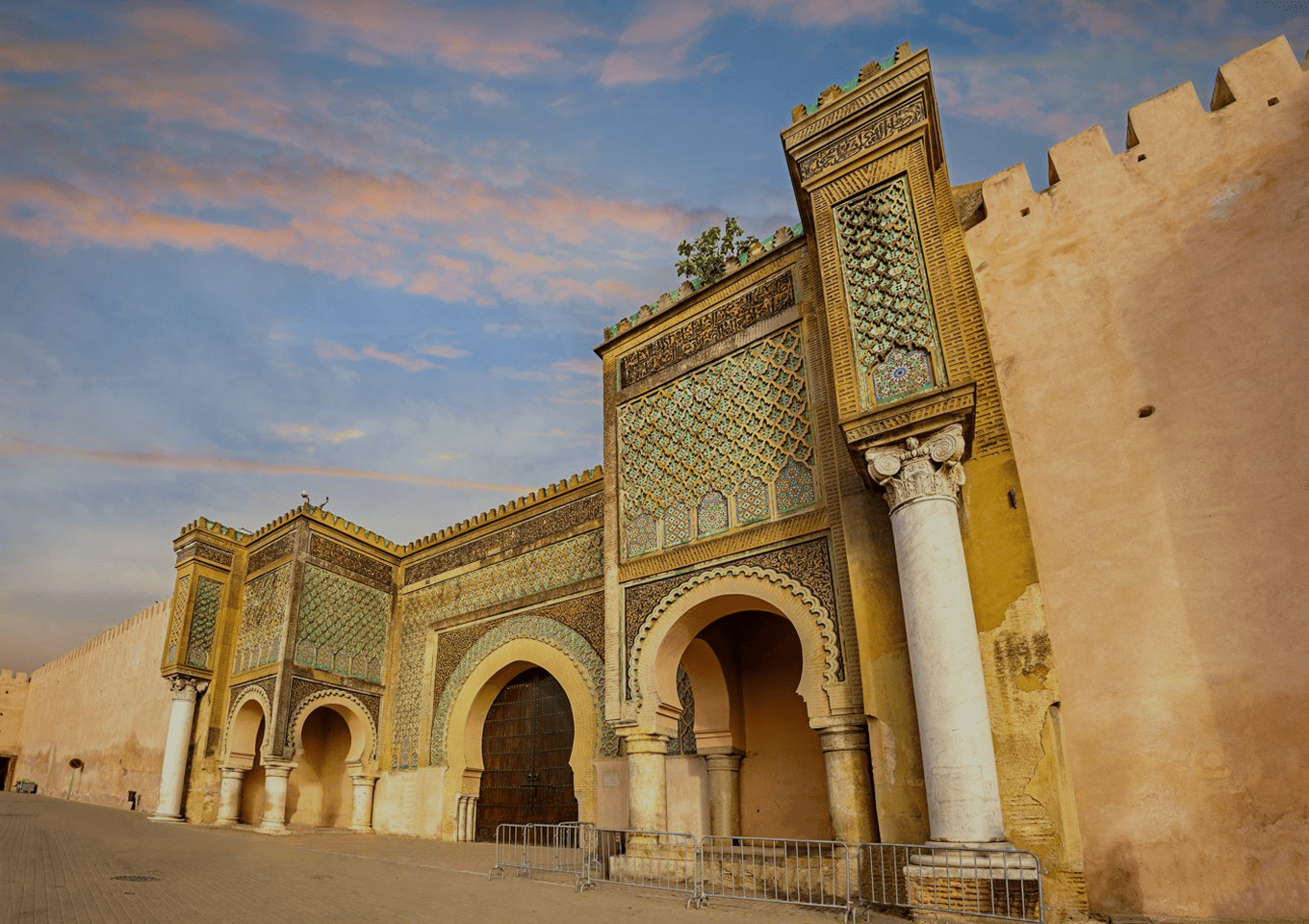
Bab Mansour Gate
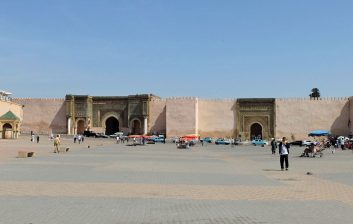
The monumental gate at the edge of the old medina is considered one of North Africa’s most beautiful — built by Sultan Moulay Ismail in 1732, faced with green-and-white zellij, marble columns from Volubilis, and Arabic inscriptions running its full length.
Mausoleum of Moulay Ismail
The shrine of the founder of imperial Meknes is one of the few major mosques in Morocco open to non-Muslims. Inside: serene white-marble courtyards, a tile-covered prayer space, and the sultan’s tomb beneath a hand-carved cedar ceiling.
Heri es-Souani (Royal Granaries)
Massive vaulted granaries built to store grain and stable up to 12,000 horses for Moulay Ismail’s army. The cavernous interiors, broken roof beams, and adjoining 4-hectare basin (Sahrij Swani) make for one of Morocco’s most atmospheric ruins.
Volubilis Roman Ruins (Day Trip)
30 km from Meknes, Volubilis is Morocco’s best-preserved Roman city — a UNESCO World Heritage Site with intact mosaics, a triumphal arch, and the colonnaded basilica still standing. Combine with a stop at the nearby holy town of Moulay Idriss.
Place el-Hedim
Place el-Hedim is the grand open square fronting Bab Mansour — built by Sultan Moulay Ismail by demolishing the houses that once stood here, hence the name (“square of demolition”). Today it’s Meknes’s social centre — lined with cafés, hosting evening storytellers, and the natural starting point for exploring the imperial city.
Moulay Idriss Zerhoun
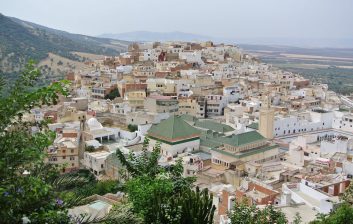
The holy town of Moulay Idriss Zerhoun sits 30 km north of Meknes, built around the tomb of Idris I, founder of Morocco’s first Arab dynasty. The whitewashed town drapes across two hills, with the green-tiled mausoleum, terraced houses, and Morocco’s only round minaret combining for one of the country’s most evocative skylines.
Bou Inania Madrasa Meknes
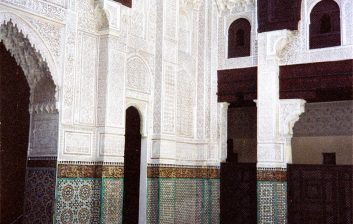
The 14th-century Bou Inania Madrasa is one of the finest examples of Marinid religious architecture in Meknes — a small but exquisite Quranic school built around a marble courtyard with carved cedar, intricate zellij, and stucco arabesques. Open to non-Muslims, with a rooftop offering close-up views of the surrounding medina.
Dar Jamai Museum
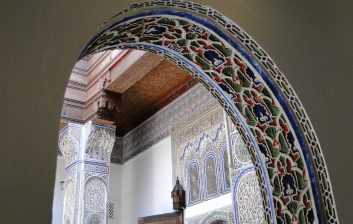
The Dar Jamai Museum occupies a beautifully restored 19th-century vizier’s palace just inside Bab Mansour — its painted cedar ceilings, andalusian-style garden, and collections of Moroccan ceramics, jewellery, and weaponry making it both a museum and a chance to wander through one of the medina’s grand traditional houses.