Marrakech es una de las ciudades más ricas en sensaciones del mundo. Medinas de muros rosados, fragantes zocos de especias, montañas nevadas a una hora de distancia: hay más cosas que hacer aquí de las que la mayoría de los visitantes espera. Esta es la lista esencial, creada a partir de lo que de verdad emociona a la gente.
Dedícale al menos 3 días completos. Dos días en la medina y una excursión de un día fuera de la ciudad te dan una imagen completa. Intentar ver Marrakech con prisas es el error más común.
1. Jemaa el-Fnaa, la plaza viva
El corazón de Marrakech y Patrimonio Cultural Inmaterial de la UNESCO, Jemaa el-Fnaa se transforma por completo entre el día y la noche. De día: encantadores de serpientes, artistas de henna, vendedores de zumo de naranja recién exprimido. De noche: un enorme restaurante al aire libre, música, cuentacuentos y el humo de cien parrillas.
- Mejor momento: Desde el atardecer en adelante: el ambiente es incomparable
- No te pierdas: Un zumo de naranja recién exprimido (4 MAD) y ver a los músicos desde las cafeterías con terraza alrededor de la plaza
- Ten cuidado: Acuerda siempre el precio antes de interactuar con los artistas o los tatuadores de henna, siempre
El Café de France y el Café Glacier tienen terrazas en la azotea con vistas a Jemaa el-Fnaa. Pide un té con menta y observa cómo la plaza cobra vida a tus pies: uno de los grandes placeres gratuitos de Marrakech.
2. Los zocos: piérdete maravillosamente
Los laberínticos zocos de la medina son una de las grandes experiencias de compras y sensaciones del mundo. Cada callejón se especializa en algo distinto: cuero, especias, lámparas, alfombras, babuchas, productos de argán. Reserva al menos 2 o 3 horas y resiste la tentación de usar un mapa: perderse un poco es precisamente lo que se busca.
La principal arteria de zocos que se dirige al norte desde Jemaa el-Fnaa. Textiles, ropa y souvenirs.
Lana teñida de colores vivos, colgada a secar sobre el callejón. Imprescindible para los fotógrafos.
El zoco de los marroquineros. El olor a cuero curtido forma parte de la experiencia.
Especias, hierbas y productos de argán. Compra aquí tu azafrán y tu ras el hanout.
3. Jardín Majorelle y Museo Yves Saint Laurent
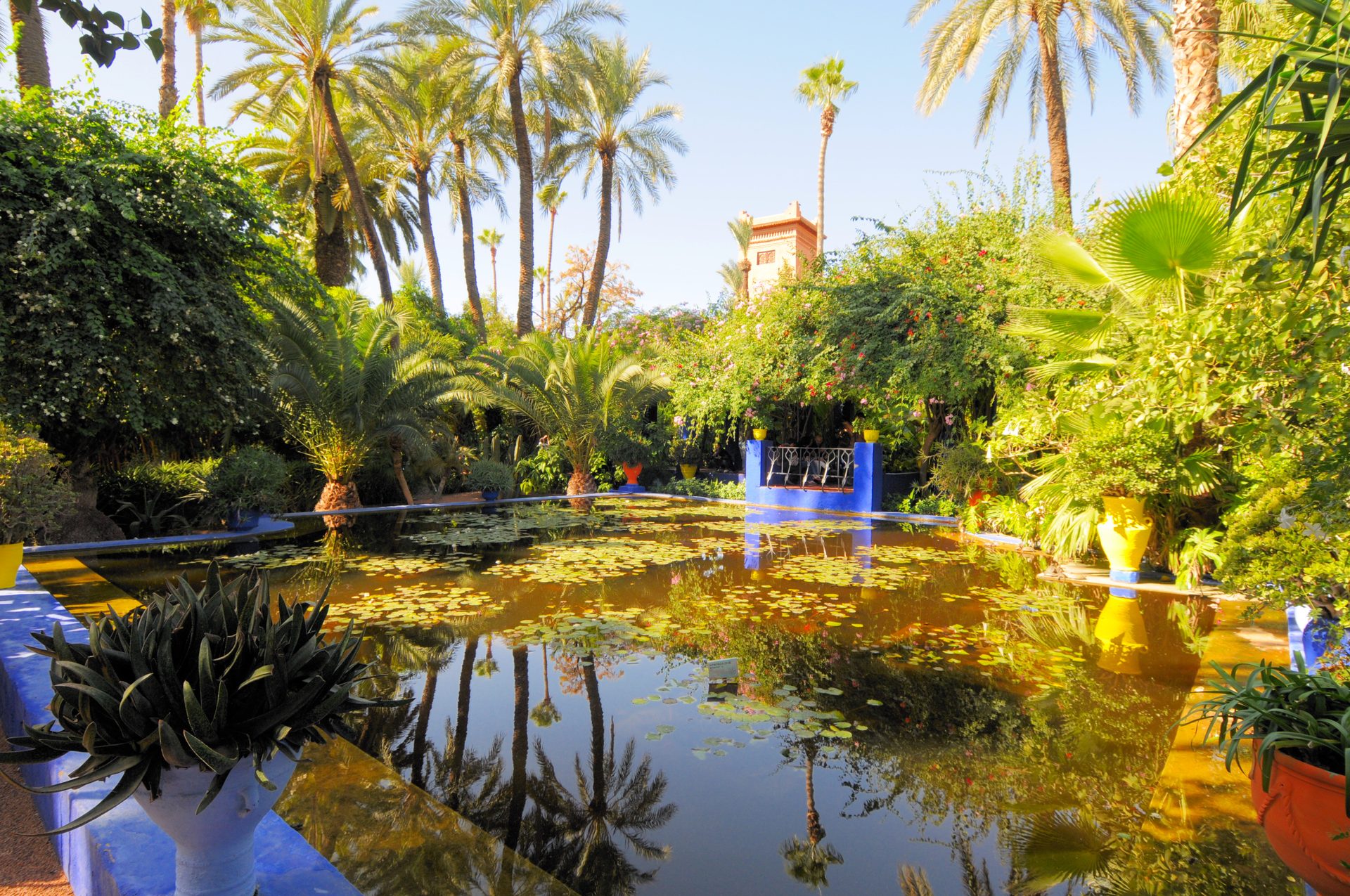
El icónico jardín azul cobalto creado por el pintor francés Jacques Majorelle, más tarde salvado y restaurado por Yves Saint Laurent y Pierre Bergé. El jardín —cactus, bambú, estanques y ese azul inolvidable— es un precioso oasis lejos del ruido de la medina. El Museo YSL contiguo es pequeño pero excelente.
- Ubicación: Gueliz (ciudad nueva), a 20 minutos a pie o un corto trayecto en taxi desde la medina
- Horario: Todos los días de 8:00 a 18:00 (de 8:00 a 17:00 en invierno)
- Entradas: Resérvalas en línea con antelación: las colas pueden ser largas en temporada alta
- Presupuesto: ~150 MAD (solo el jardín), ~200 MAD (jardín + Museo Bereber)
4. Palacio de la Bahía
Construido a finales del siglo XIX para la corte de un gran visir, el Palacio de la Bahía es una obra maestra de la arquitectura marroquí. Techos de cedro pintado, intrincada decoración de azulejos, patios tranquilos y jardines de cítricos: es lo que más claramente te transmite cómo era antaño la vida de la élite marroquí.
El Palacio de la Bahía se llena a media mañana. Llega a la hora de apertura (8:45) para disfrutar de pasillos tranquilos y mejores fotos sin multitudes.
5. Mezquita Koutoubia y jardines
La mayor mezquita de Marrakech y el monumento que define el horizonte de la ciudad. Los no musulmanes no pueden entrar en la mezquita, pero los jardines que la rodean están abiertos a todos y son un tranquilo contraste con la ajetreada medina. Su alminar de 70 metros es uno de los mejores ejemplos de arquitectura almohade del mundo.
6. Tumbas Saadíes
Ocultas a la vista durante siglos hasta que fueron redescubiertas desde el aire en 1917, las Tumbas Saadíes son el lugar de enterramiento de la familia del sultán Ahmad al-Mansur. Yeserías y azulejos de zellige extraordinariamente detallados en un lugar compacto e íntimo. Llega temprano: se llena mucho.
7. Excursión de un día a las montañas del Atlas
El Alto Atlas está a menos de una hora de Marrakech y el contraste es impresionante: del polvo del desierto a los bosques de cedros y los pueblos bereberes. El valle de Ourika y la carretera a Imlil (base del monte Toubkal, el segundo pico más alto de África) se pueden visitar fácilmente en una excursión de un día.
Los senderos del Atlas no están bien señalizados para excursionistas independientes. Un guía local mejora enormemente la seguridad y añade un gran contexto cultural. Resérvalo a través de tu riad o de un operador autorizado.
8. Hammam tradicional
El hammam —un baño de vapor tradicional marroquí con exfoliación de jabón negro— es una de las experiencias más genuinamente marroquíes que puedes vivir. Las opciones van desde los hammams de barrio (20-30 MAD) hasta los hammams de spa de lujo (200-500 MAD).
- Opción económica: Hammam Bab Doukkala (local, auténtico, muy barato)
- Gama media: Les Bains de Marrakech (hammam turístico especializado, personal angloparlante)
- Lujo: Spa de La Mamounia (de categoría mundial, reserva con antelación)
9. Come como un local
La escena gastronómica de Marrakech va desde los puestos callejeros hasta restaurantes premiados. No te pierdas:
- Tajín — cordero o pollo cocinado a fuego lento con limón en conserva y aceitunas
- Pastilla — pastel dulce-salado de pichón o pollo con almendras y canela
- Sopa harira — la clásica sopa marroquí de lentejas
- Mechoui — cordero asado entero del callejón del mechoui cerca de Jemaa el-Fnaa
- Té con menta — servido desde lo alto, siempre dulce, siempre ceremonial
Para comer mejor a precios más bajos, aléjate uno o dos callejones de la plaza principal hacia el interior de la medina: los mismos platos cuestan la mitad que en los puestos para turistas de Jemaa el-Fnaa.
Mantente seguro mientras exploras Marrakech
- Quédate en las calles principales por la noche y evita los callejones sin iluminar
- Rechaza las ofertas de «guía» no solicitadas con firmeza pero con educación
- Lleva el bolso por delante en los zocos
- Descarga la app StaySafe Morocco para mapas sin conexión, ubicaciones de hospitales y números de emergencia
La app StaySafe Morocco te ofrece números de emergencia, ubicaciones de hospitales y farmacias, y guías de seguridad de todas las grandes ciudades marroquíes, todo sin conexión. Descárgala antes de tu viaje.
🛡 Llega a Marruecos ya conectado — y seguro
Cada eSIM de StaySafe Morocco incluye SOS Familiar gratis: one tap to reach emergency help and share your live location with your family. No data cap, keep your number, from $20.79.
Consigue tu eSIM + SOS Familiar →Explora Marruecos — guías de ciudades
- Agadir
- Los mejores lugares que visitar en Marruecos: la lista esencial para tu primer viaje
- Casablanca
- Chefchaouen
- El Jadida
- Guía cultural de Essaouira: música gnaua, arte y vida local
- Essaouira
- Fez
- Marrakech en verano: piscinas, calor y cómo mantenerse fresco
- Marrakech
- Meknes
- Nador
- Ouarzazate
- Oujda
- Lugares que visitar en Marrakech: un mapa día a día para primerizos
- Rabat
- Safi
- Tánger
- Tétouan