Popular Destinations in Marrakech
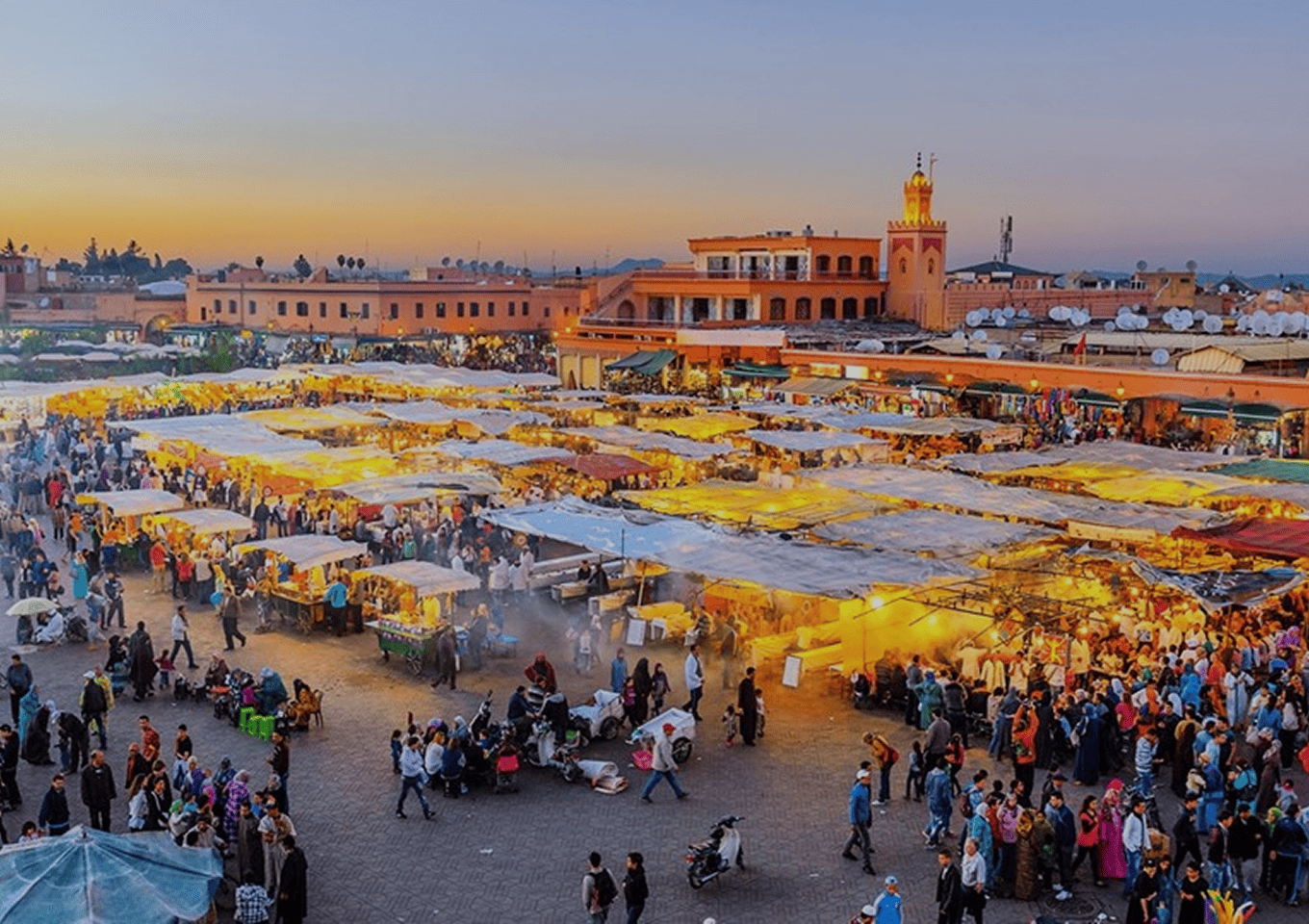
Jemaa el-Fnaa
The beating heart of Marrakech — by day a craft and orange-juice market, by night a vast open-air theatre of storytellers, snake charmers, musicians, and food stalls. UNESCO-listed as Intangible Cultural Heritage, busiest at sunset.
Koutoubia Mosque
The city’s defining landmark — a 12th-century minaret 77 metres tall that inspired the Giralda in Seville. The interior is closed to non-Muslims, but the surrounding gardens are open to all, with the minaret beautifully lit at night.
Bahia Palace
A late-19th-century palace of carved cedar ceilings, stucco arabesques, and tranquil orange-tree courtyards. Built by the Sultan’s grand vizier Ba Ahmed, it’s one of the finest examples of Moroccan craftsmanship open to visitors.
Jardin Majorelle & YSL Museum
The cobalt-blue garden created by Jacques Majorelle and saved by Yves Saint Laurent — a small but exquisite collection of cacti, palms, and bamboo. The neighbouring YSL Museum displays the couturier’s personal archive in striking purpose-built galleries.
Madrasa Ben Youssef
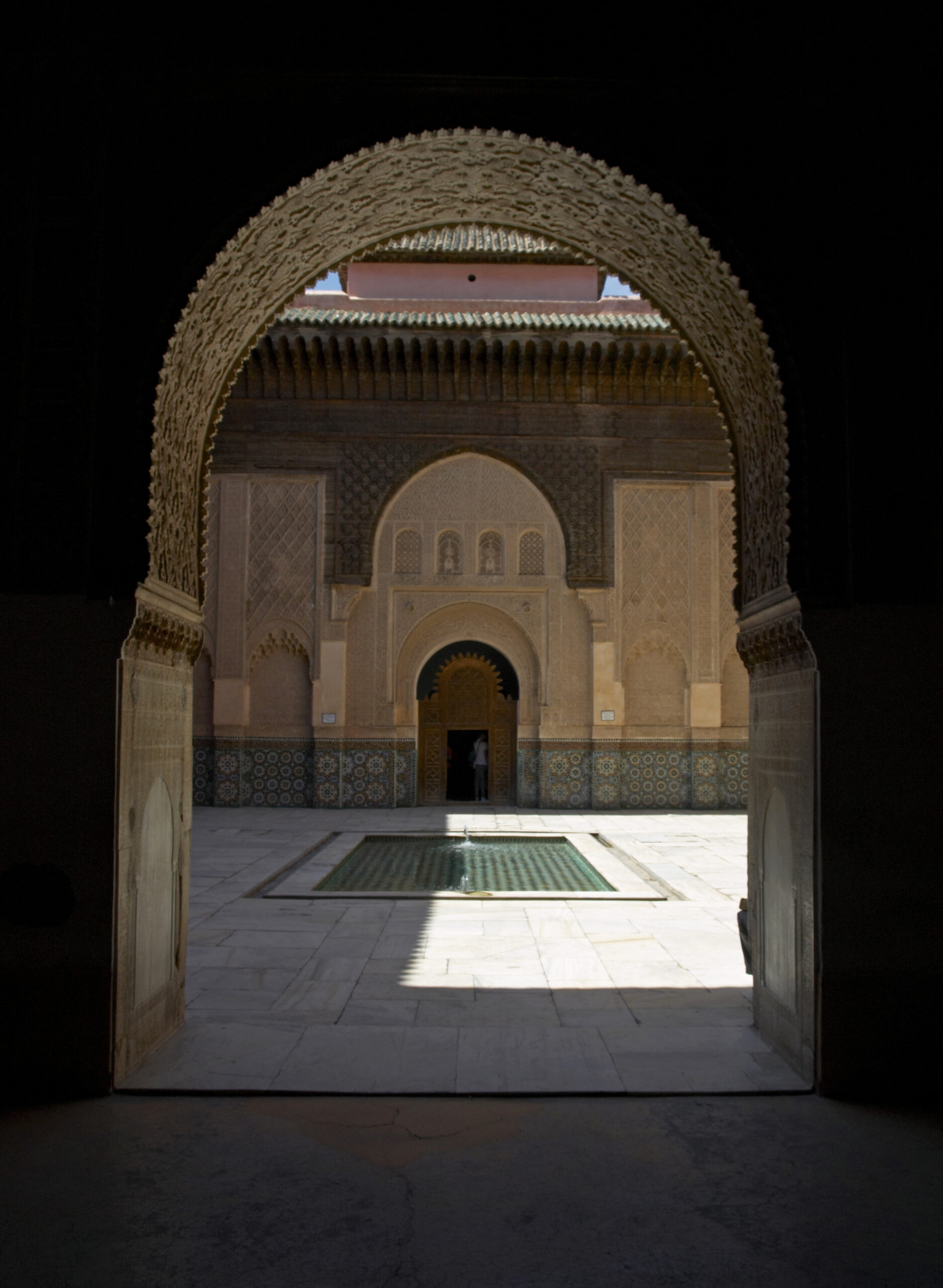
The 16th-century Ben Youssef Madrasa was once North Africa’s largest Quranic school, housing up to 900 students in small cells around a stunning marble courtyard. Recently reopened after extensive restoration, it remains one of Marrakech’s most photogenic interiors — every wall covered in intricate zellij, carved cedar, and Kufic stucco inscriptions.
Saadian Tombs
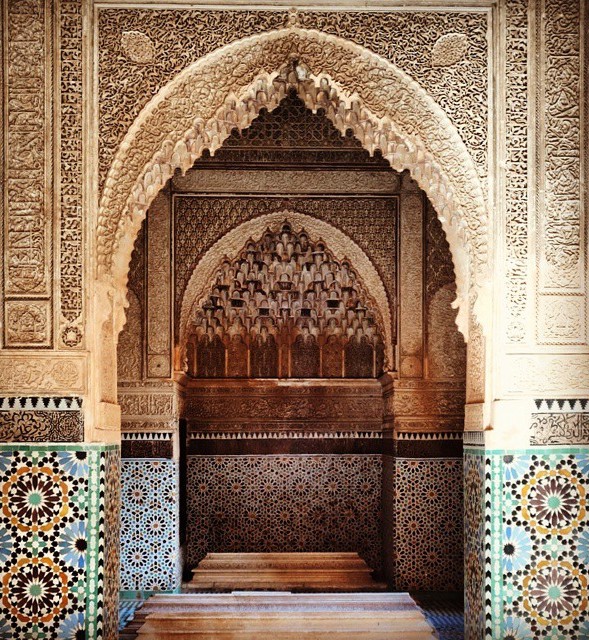
The Saadian Tombs were sealed for centuries and rediscovered in 1917 — a small but exquisite 16th-century royal necropolis hidden behind the Kasbah Mosque. The Chamber of Twelve Columns, where Sultan Ahmed al-Mansour rests, is one of the finest examples of Saadian decorative craftsmanship anywhere in Morocco.
El Badi Palace
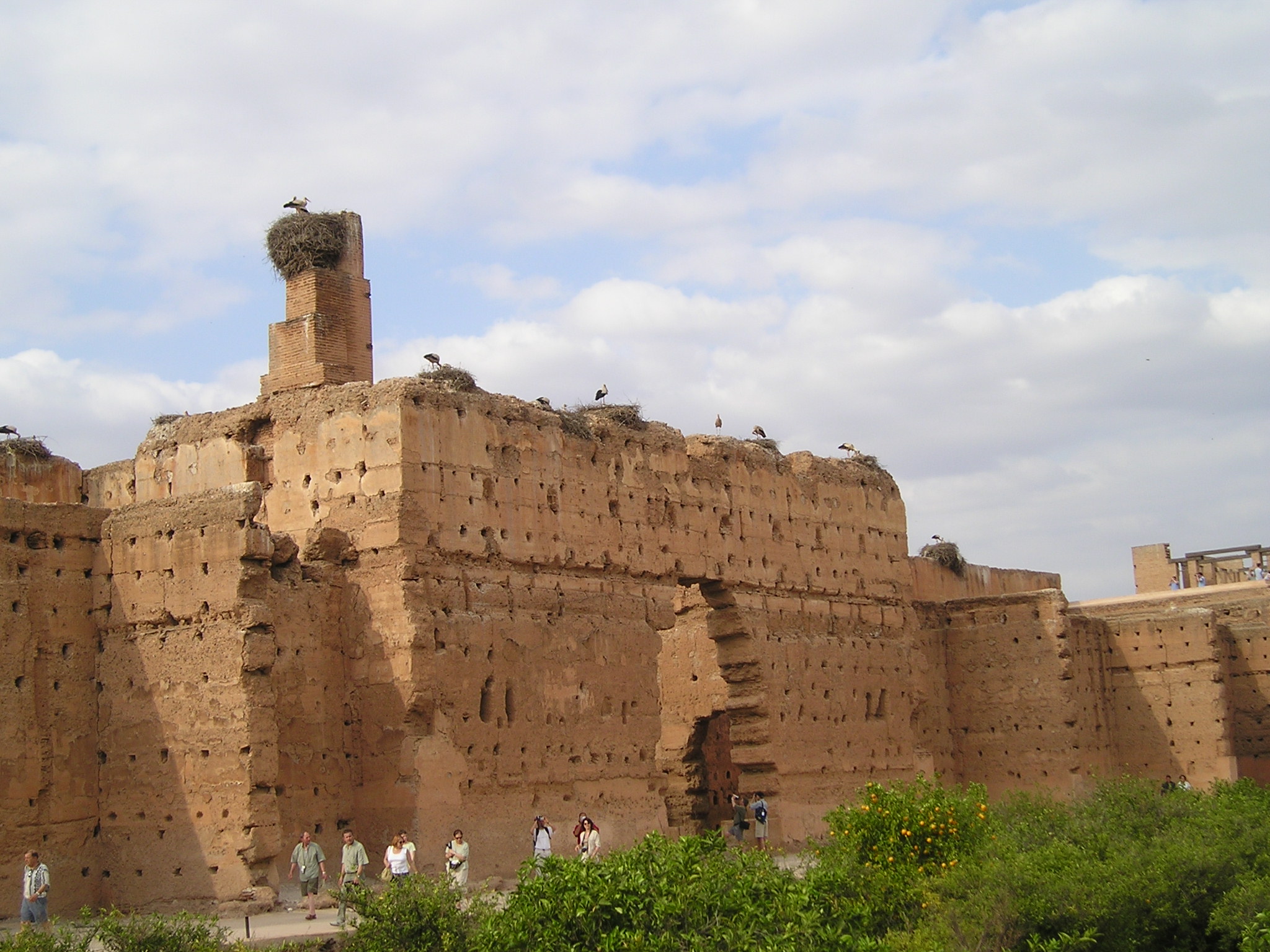
El Badi Palace was once the most lavish royal palace in 16th-century Morocco, built by Sultan Ahmad al-Mansour with materials looted from Spain, Italy, and Mali. Today only its vast sunken gardens and towering pisé walls remain, but the scale alone — plus rooftop views over the medina and resident storks — makes it unmissable.
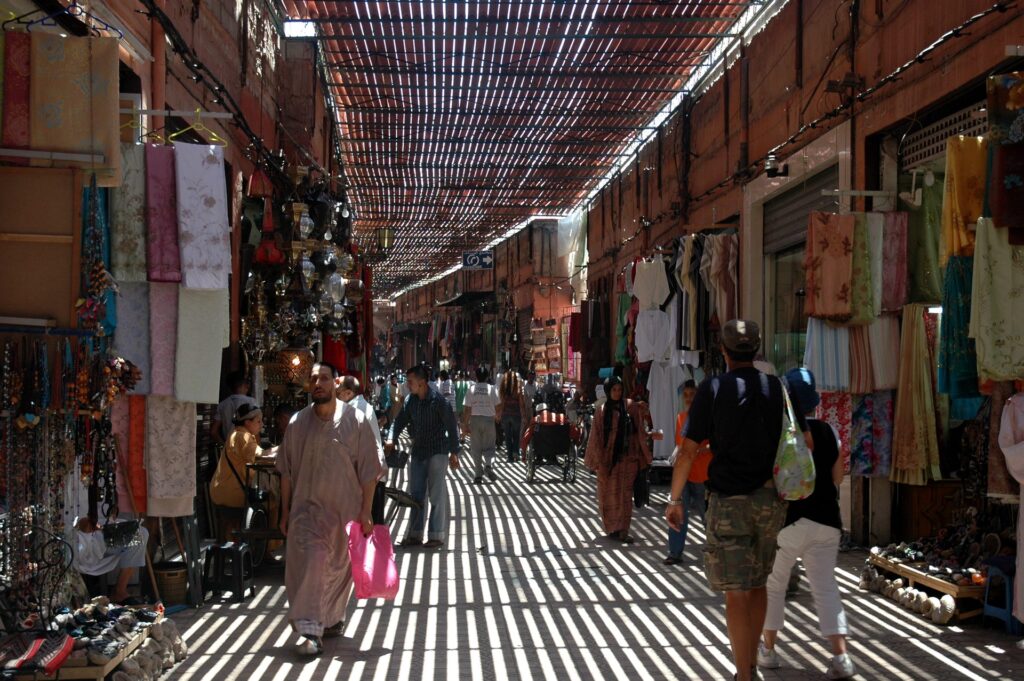
Souk Semmarine
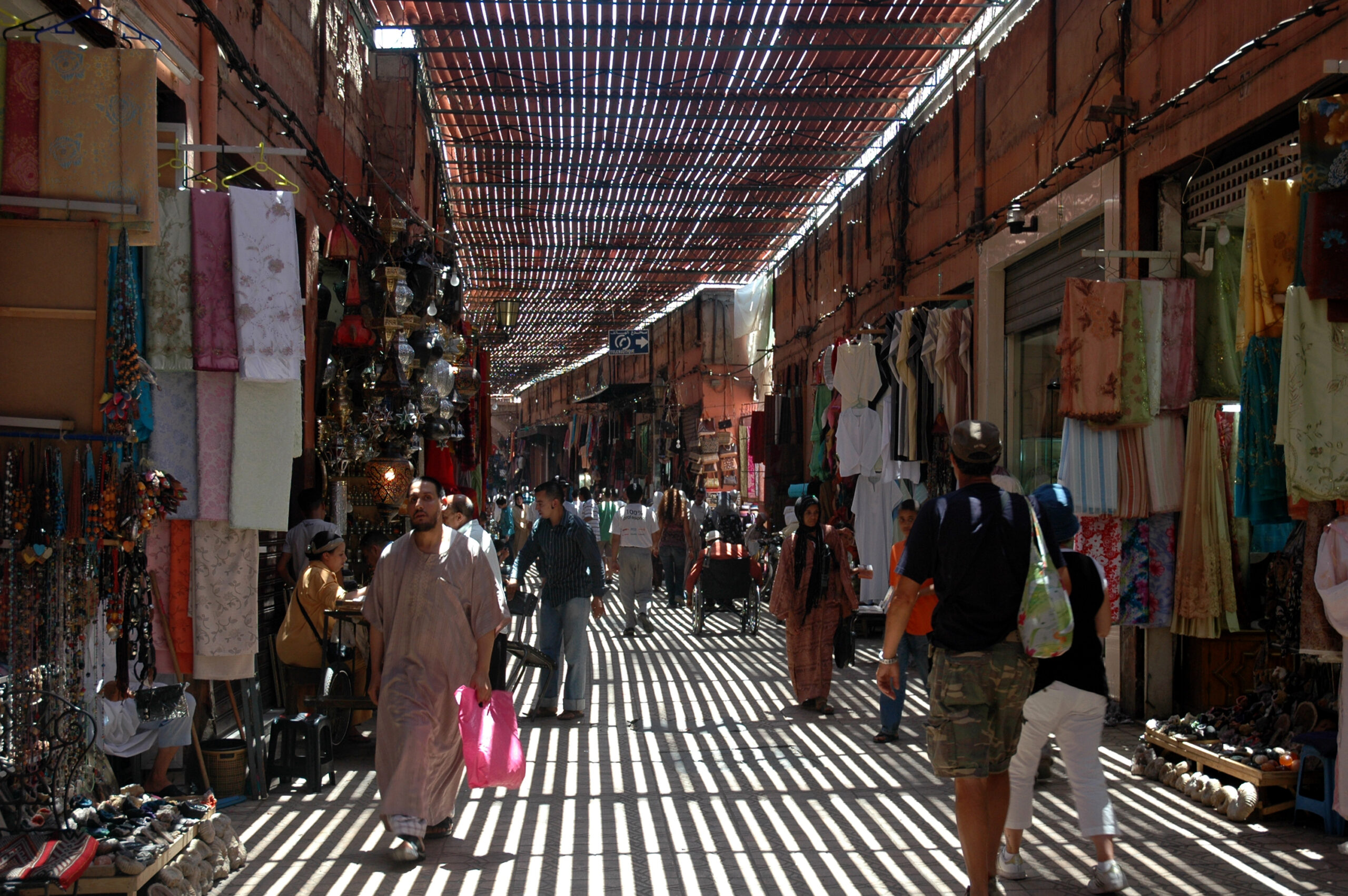
Souk Semmarine is the busy main artery of Marrakech’s souks — a covered walkway running north from Jemaa el-Fnaa lined with textile, leather, lantern, and jewellery shops. From here, smaller lanes branch into the specialised souks of dyers, blacksmiths, woodworkers, and spice merchants — best explored slowly without a fixed plan.